A Locked Door Opens a Future
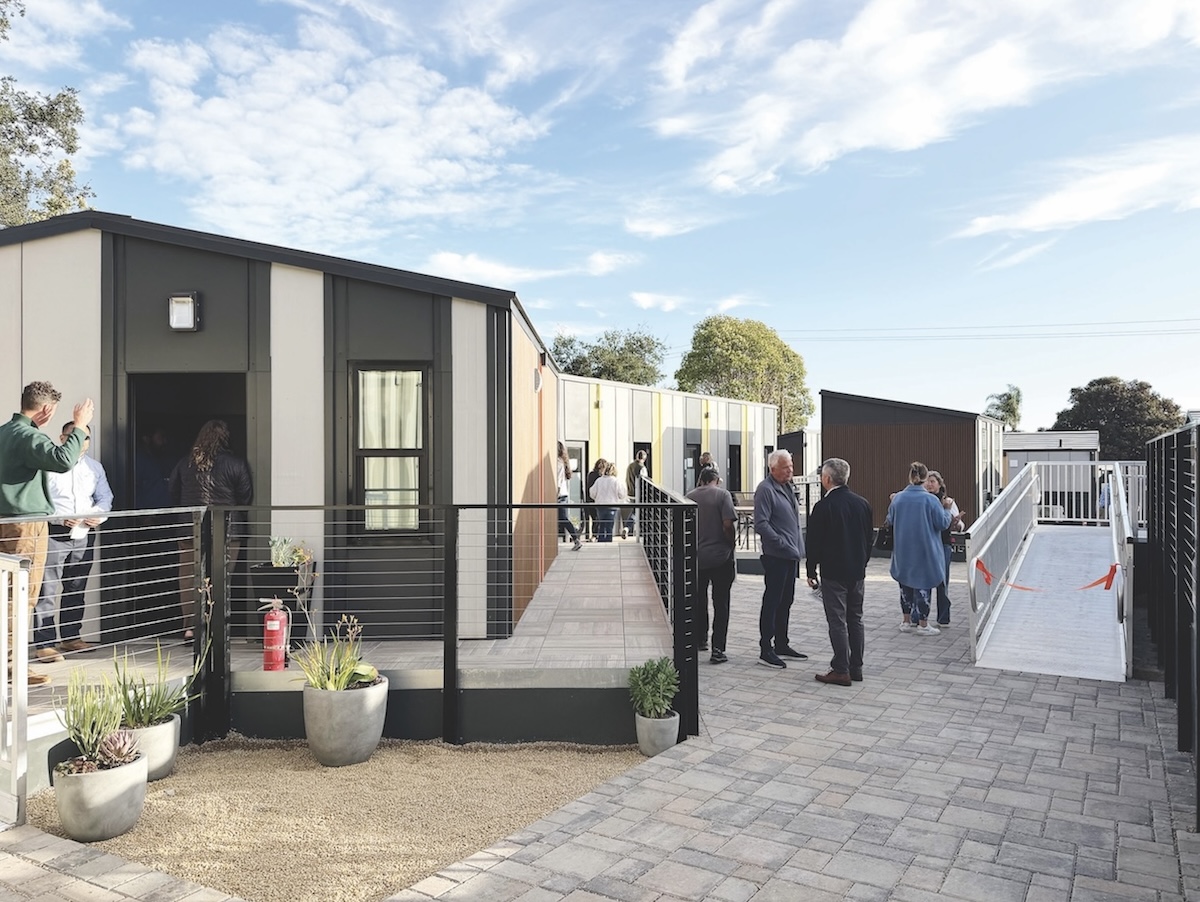
In Los Angeles, nearly two out of every three people experiencing homelessness are living unsheltered on the street. DignityMoves offers a way to bring them indoors: fast, cost-effective supportive housing, built with modular units and opened in months rather than years, at a fraction of the cost of traditional permanent housing.
In practice, this means a first-of-its-kind community in Hollywood designed specifically for pregnant and postpartum women and their newborns. Built in partnership with Aviva Family and Children’s Services, the 27-bed site will include private rooms, a medical room, an exercise room, and a laundry room, plus a storefront that will double as workforce training. Once open, this community will serve 40 to 50 families a year, giving mothers stable housing alongside maternal health care, substance use treatment, and case management. Construction is set to begin in early 2027.
A few miles away in East Hollywood, construction is underway on a 45-unit, 51-bed interim supportive housing community with Hope the Mission for adults and My Friend’s Place for Transitional Age Youth (TAY), with an anticipated opening early next year.
Targeted Expansion, Rapid Results
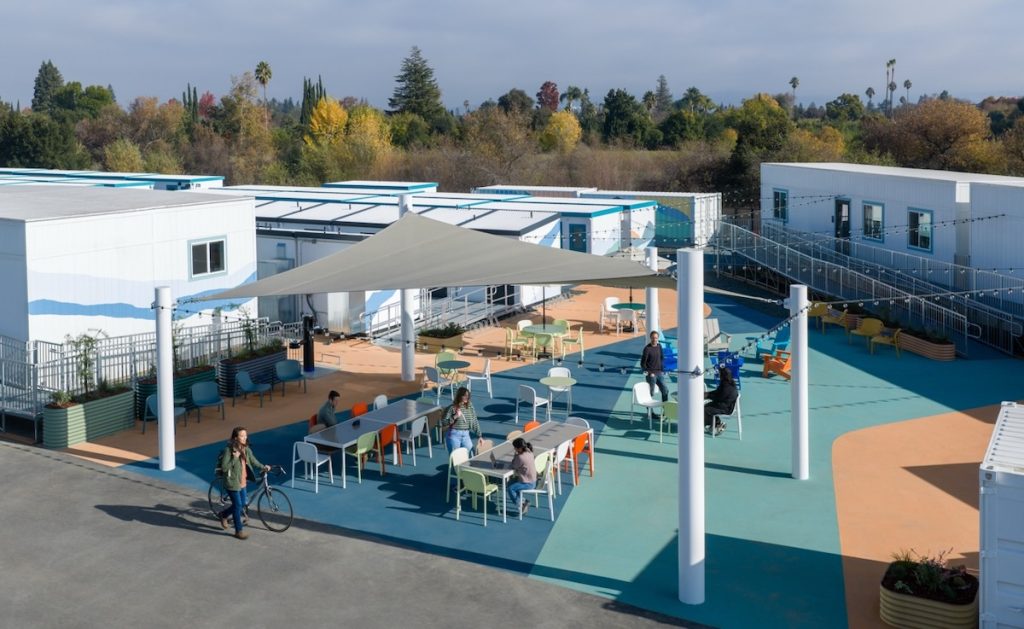
DignityMoves’ model works because each partner plays to its strengths. DignityMoves COO and President of the LA & Southern California Region, Freya Estreller, explains the key roles: DignityMoves develops and builds, service partners deliver on-site supportive services, and the government provides land and program funding, with construction capital assembled from public grants, philanthropy, and impact investment. The results: 15 communities open across California, with five more underway, and more than 2,300 residents served since 2021.
Founded during COVID by Elizabeth Funk to fill the gap between living on the street and traditional permanent housing, DignityMoves’ interim supportive housing communities are factory-built off-site, delivered and set in place, on land borrowed from cities, counties, and the occasional private landowner. Once a site has power, water, and permits in hand, a community can open its doors within months.
The model relies on identifying why people refuse help in the first place, then removing every impediment. Estreller calls it the Four Ps: privacy, pets, possessions, and partners. Every resident gets their own room with a door that locks. Pets are welcome. A case manager helps sort which possessions fit inside, with the rest going into an on-site storage unit. If an applicant has a partner also on the street, they get a double room. In exchange, residents work with an intensive case manager on an exit plan toward more stable or permanent housing within six to 12 months.