
Everything Clay Can Be
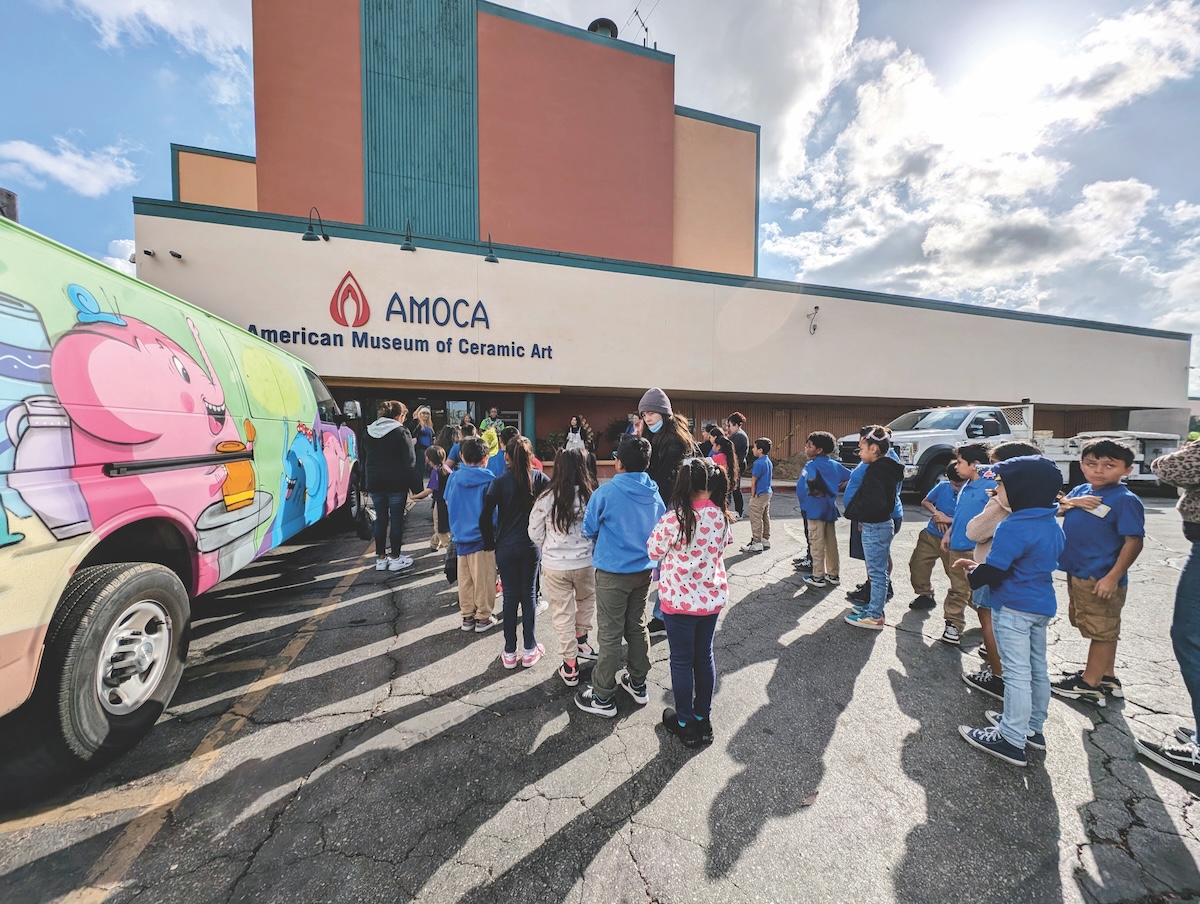
The American Museum of Ceramic Art (AMOCA) is the largest ceramics museum in the country, but its reach extends well past its gallery walls. Alongside original exhibitions that invite visitors to experience ceramic art from fresh and meaningful perspectives, AMOCA offers one of the most active ceramics education programs in the region: in-house field trips, family days, a yearly high school exhibition, docent-led tours, a MudMobile that travels to public schools and libraries, and an Artist-in-Residence program. The adjacent Ceramics Studio provides hands-on opportunities for artists and community members to develop technical skills, explore new ideas, and expand their creative practice. Together, these offerings make AMOCA a vital cultural destination that inspires audiences regionally and globally.
“Unlike a typical museum that only shows art, we mount diverse exhibitions that tell stories tied to ceramics, whether that be installation work, political work, functional work, industrial work, or factory work. If it’s got clay in it, we’ll talk about it,” says Beth Ann Gerstein, AMOCA’s Executive Director.
The museum was founded in 2003 by David Armstrong, who studied with American ceramicist and educator Paul Soldner at the Claremont Colleges. AMOCA opened in 2004 with a solo exhibition of Soldner’s work at its original Pomona location. The museum expanded into a 51,000-square-foot building in 2010 when an old savings and loan came on the market just up the street.
Now the museum boasts four stunning gallery spaces showcasing rotating exhibitions that reflect a connection to the community, turn a lens on complex cultural, historical, and modern political narratives, and often represent under-recognized artists and topics. Recent exhibitions have included “Togei: Contemporary Japanese Ceramics,” which highlighted the evolution of Japanese ceramics, and “Architectural Pottery: Ceramics for a Modern Landscape,” a groundbreaking exhibition focused on the mid-century modern design company Architectural Pottery. The aim, says Jenifer Fleming, Director of Advancement, is “to serve as a resource for creative engagement with ceramics.”
That creativity is in the material at the very heart of this unique museum. As Gerstein says, “Ceramics [clay] can be anything you want it to be. You can eat off it and drink out of it. And you can revere it, and you can wear it. It can be big. It can be small.”
Making More Room for Making
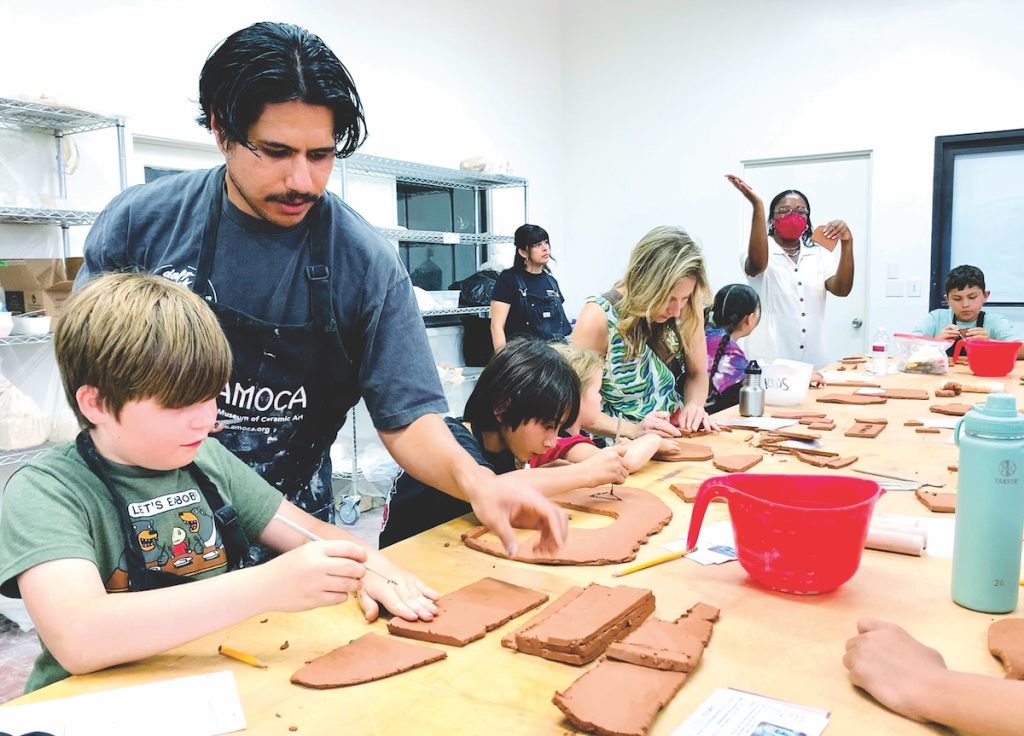
This year, the museum grew even further, opening up new and renovated spaces within its existing building to maximize the reach of its exhibition, education, collections, and studio programming.
As school districts cut arts funding, AMOCA is expanding what it can provide to its community. With a new Kids Makerspace, more experiential classes and programming for kids, MudMobile visits with fees waived for Title I schools to bring a clay story and a hands-on project directly to students, and a continuing emphasis on groundbreaking exhibitions that can’t be seen anywhere else, this compelling museum occupies an important place in the vibrant artscape of Southern California.