Patsy Mangas & Dayna Price as: Leading by example
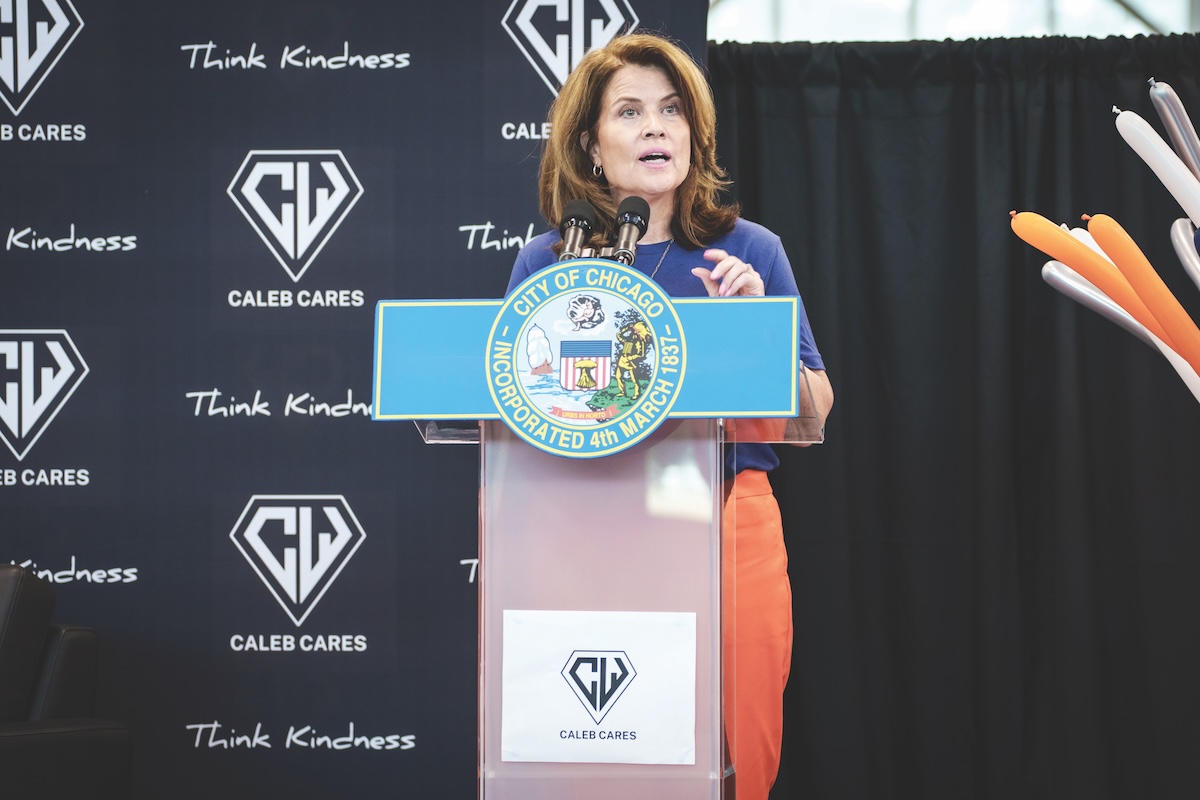
Chicago Bears Quarterback and Heisman Trophy winner Caleb Williams is best known for his athletic feats on the gridiron, but at 23 years old, he’s wasted no time platforming his fame for the betterment of children with his nonprofit, Caleb Cares, an organization devoted to improved mental wellness, youth empowerment, and bullying prevention.
Behind the scenes, Caleb Cares is run by a core staff including Executive Director Patsy Mangas and Director of Community Outreach Dayna Price – who also happens to be Caleb’s mother. Though each of them arrived at their philanthropic pursuits through different paths, they’ve come together in an effort to bring Williams’ values to the young people who need them. Mangas and Price talked to The Giving List about their work and how nonprofits can attract donors even without a celebrity spokesperson.

Zachary Bernstein:People take varied paths on the road to becoming philanthropists and you two illustrate that perfectly. How did you each come to take part in the world of nonprofits?
Dayna Price: My background was in early childhood education. I owned a daycare center for 16 years. We had to close its doors when Covid hit, but even after Covid was receding and we opened back up, daycare just never got back to what it was, so I closed the business. Around then, Caleb was trying to figure out what kind of nonprofit he wanted to build, a tossup between working with children, or with adults. He chose working with children and created Caleb Cares. I kind of fell into it, working from what I already knew. I didn’t necessarily know what to expect because I had never worked with a nonprofit before, but I’m still able to work with children, which has always been a passion of mine.
Patsy Mangas: Before joining Caleb Cares, I founded a nonprofit called She Rocks The World – a movement dedicated to empowering teenage girls at a critical moment. I witnessed firsthand how social media was reshaping our girls’ sense of self-worth, and not for the better. This was the dawn of the social media era, when a girl’s confidence could rise or fall based on the number of likes on her Facebook or Instagram post. TikTok didn’t even exist yet!
When Covid hit, I stepped away, and that’s when Caleb’s dad reached out. He asked if I’d help with Caleb Cares as a volunteer and I told him, “Absolutely! Let me share every mistake I made so you don’t have to make them, too.” What began as simply wanting to help has blossomed into my full-time calling. Now I lead the day-to-day operations, programming, and events.
We make an incredible team! For me, philanthropy has always been about one thing: lifting people up and creating real, transformative change. And I’ve always gravitated toward kids – there’s something magical about them. They just want to be loved. They haven’t been hardened by the world yet. They’re pure potential.
ZB: You just said that Caleb had to choose between working with children and adults. It seems like there was a third option to just be an NFL star and not have a nonprofit at all. Why did Caleb feel the need to start a nonprofit in the first place?
DP: We talked about different ways to give back. He actually worked in my daycare center as a junior assistant. He felt strongly about wanting to help children that had been bullied. He saw it growing up and he didn’t like it. He didn’t feel like there were enough resources out there to help kids who are dealing with bullies, so he wanted bully prevention to be part of the program. The mental health part of Caleb Cares came later as we began to see a lot of people struggling during Covid.
It was a change for everybody, but he wanted to do this when he realized that he had a platform. He was often asked what he’d want to do outside of football. Caleb Cares was the natural thing.
PM: I remember Caleb saying he was inspired by his mom and dad who were always helping others. When he was younger, he didn’t always understand why. He said, “Why do you have to help everybody?” But he grew, and the sentiment just sunk into him. Now, giving has become part of his own mission.
ZB: Every nonprofit organization has to find their own way to attract donors. And maybe you have a leg up because Caleb is a celebrity, but what advice would you have for other nonprofits trying to attract their own donors and specifically, people who not only want to give money but also share their values?
DP: I would just say that what I’m learning as far as raising money goes, is that there are companies who actually have to give. So, if you can partner with some good companies focused on the same issues and challenges that you are, that can be a big part of your operation. It meshes even better when your core values align.
PM: People have to be passionate about what they’re doing. I think we can say that about – Caleb, Dayna, Carl, and myself – we’re very, very passionate about what we do and about inspiring children and lifting them up and sending them the message of belief… belief in themselves. The true gold is watching the kids’ faces when they walk into Soldier Field, the Bears stadium, for the first time. When they see Caleb out on the field living his dream. They just might be inspired to live their dream. We work to broaden the lens through which kids see the world and when we host over 600 kids a season, we just broaden their world.
We’re fortunate enough that Caleb is a high character person. He’s smart, compassionate, and of course, a really good football player. But I would say to other nonprofits – I think a lot of them are founded and guided through passion, but often you’re faced with a lot of different turning points and they tend to move away from the reason they started their organization. I know when I founded my nonprofit, before I joined Caleb Cares, there were many different people coming at me wanting to do different things. You just have to stay true to why you’re doing it. Stick to what your mission is.
You’ve heard this before, but you’ll have to give a lot more noes than you do yeses. With that being said, we’ve been really open to partnering with people and that’s worked for us. I think it’s so important to partner with other foundations and organizations. You can impact more children.

ZB: What’s the hardest part about running a nonprofit like yours? What gets in the way of you achieving your goals?
PM: Funding. It’s just a continuous loop that you have to keep going through. It’s about cultivating relationships and building trust within a community to show them that you’re going to do what you say you’re going to do. Then, showing the impact of what you’re doing. You have to provide the data. There are some really interesting data and trends. But the fun stuff for us is working with the kids.
DP: I’d agree. That’s the hardest part, because it’s easy to show up. But sometimes, if you don’t necessarily have the funding to give all that you want to give, you might not be able to hit all those data points you were hoping to hit.
ZB: For Dayna, I imagine there’s some sort of unimaginable pride in your son, but for each of you, what’s the most gratifying part about running a nonprofit?
DP: It is pretty surreal. But what’s great for me is that I’m able to still stay within my craft. That’s one thing. Also, you don’t really realize what people don’t have until you begin working at some of the places that we have gone to. The organizations and the institutions that we’re working with really help to make a positive impact.
PM: And it’s all because of your son.
DP: It’s all because my son has a platform. I remember when he actually was getting ready to go to the draft and they asked me how I felt at that moment. It was surreal then, and it’s still surreal that I’m actually here and being able to share my son not just with a community, but nationally and internationally.
PM: For me – hands down – seeing the kids’ faces when they walk into Soldier Field, or when they win the Caleb Cares Hero Award. Or when Caleb visits their schools, it’s like a shot of adrenaline. I said to him once, “Caleb, how cool is it that just by walking into an auditorium you completely lift people up.” He doesn’t invite the press, he just went and surprised three different schools and the kids were so inspired and happy.
So many of these kids come from traumatic, impoverished backgrounds. We give them hope and belief and we let them know we see them. Caleb through wins and losses remains the same high character person who the kids want to emulate.
ZB: What would you say to people who want to be donors and find their organizations to give their money to. People who maybe haven’t donated in a big way, but want to. How do they find their people?
DP: If they have money and they want to give money, they just need to figure out what their passion is, something that they love, and do their research. Make sure the organizations they find are reputable. How long have they been around? We would love to be that organization.
PM: And just because they have a social media account, doesn’t mean they’re actually running a nonprofit. There are a lot of frauds out there, so beware, but there are even more effective nonprofits who do amazing work.
DP: It shouldn’t be difficult to find the right place that’s right for you. A search on Google could come up with a whole list of great nonprofits. They’re out there. And they’re waiting to hear from you.