Grace Fisher: Meet the Artist
As a teenager raised in Santa Barbara, Grace Fisher was an active student and classically-trained multi-instrumentalist who excelled at playing piano, cello, and guitar. She dreamt of a future in music performance, but that dream was cut short by a sudden polio-like illness that left her forever paralyzed from the neck down at the age of 17. As devastating as the diagnosis was, this life-altering event did not stop her from fostering a community from the arts and becoming a celebrated artist herself.
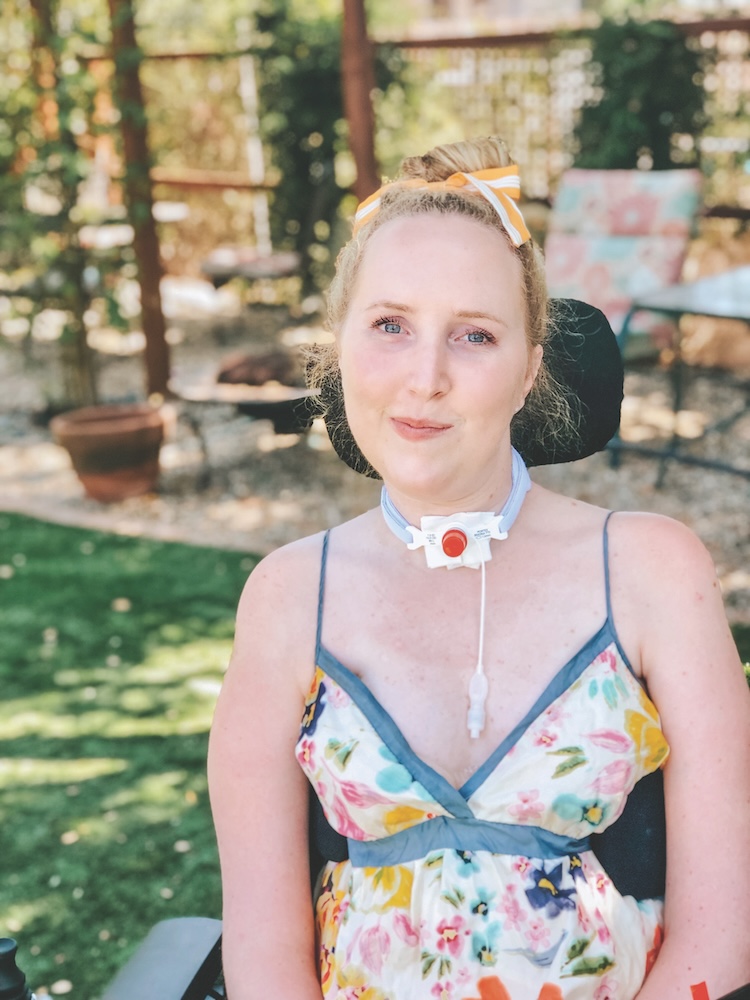
She also established the Grace Fisher Foundation, a nonprofit that continues Fisher’s deep commitment to the arts. The foundation provides an arts outlet for people with both physical and intellectual disabilities. At the center of it all is the inclusive Arts Clubhouse, a hub currently housed within La Cumbre Plaza shopping mall that offers free arts classes, performances, and events with programming nearly every day of the week.
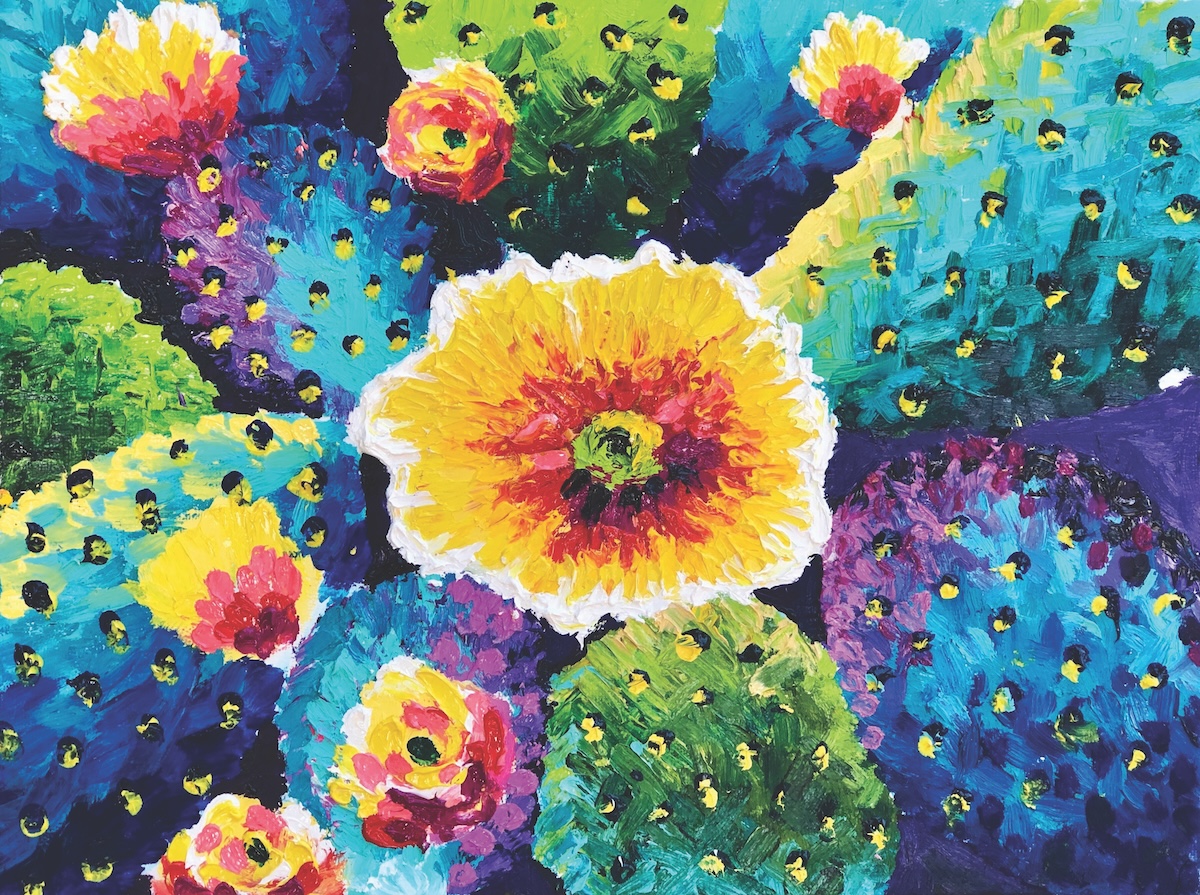
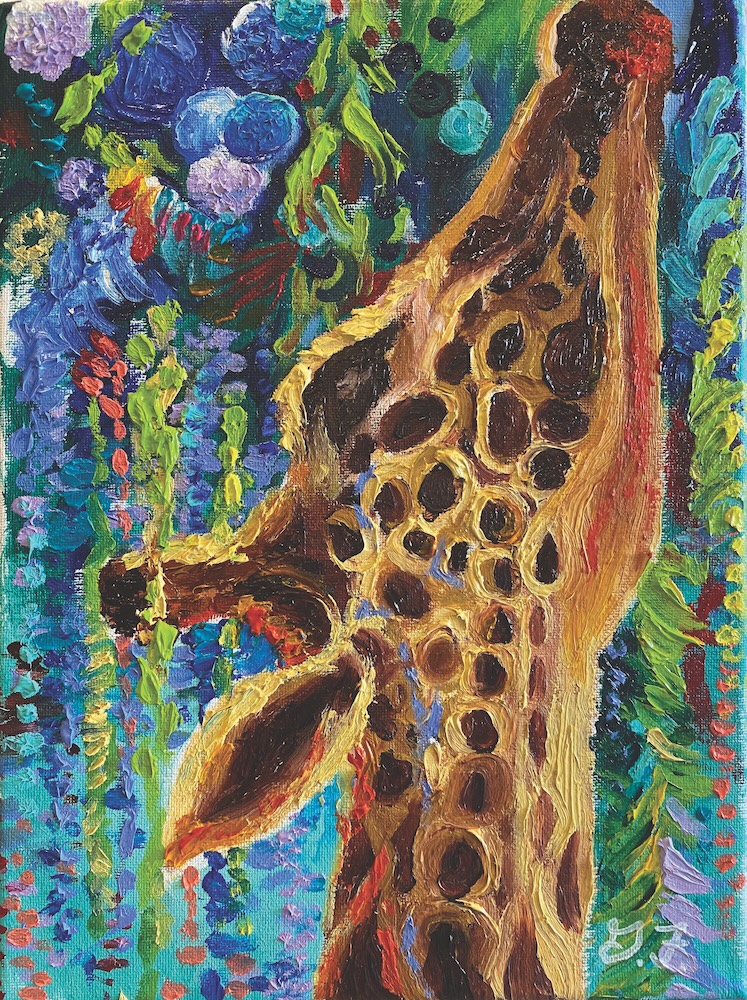
You can see Fisher’s own artwork displayed at the Clubhouse and throughout this Giving List book.
The Giving List: You’re contributing artwork for The Giving List book this year. How did you get started as a visual artist?
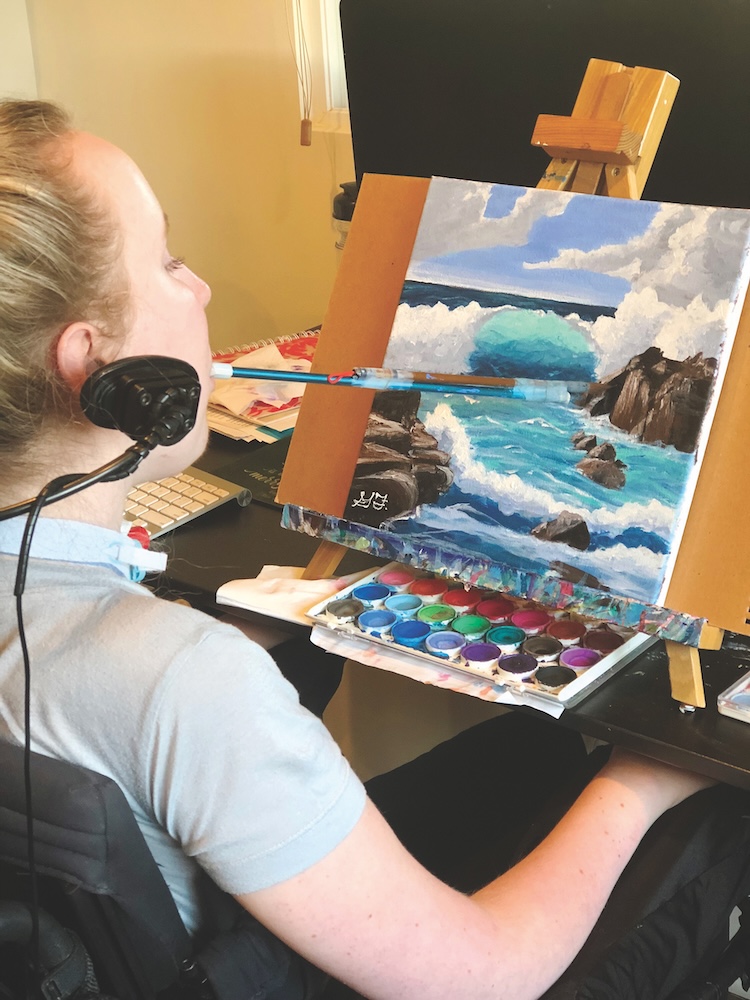
Grace Fisher: Art was something I really got into shortly after my disability. They introduced me to that when I was in rehab at Craig Hospital. It’s all with a paintbrush attached to a stick that I hold in my mouth. Once I learned, I just got really into it. I wasn’t into art before my disability, so it was a new learning experience and something that I could do despite all my other physical limitations. My style’s evolved. I really like using vivid colors, thick paint application, and experimenting with color and texture. I later took a painting class at City College and that was really helpful, but I’m mostly self-taught, I learn by experience and through making mistakes.
TGL: Your foundation includes a Clubhouse devoted to the arts and you have all these people coming together to make art. Do you think that communal experience is informing the art that you make?
GF: I think so. The space is a beautiful, inspired place for creativity. The arts were really instrumental to my recovery and my state of mind. I was 17 at the time. That was 10 years ago and we didn’t have a physical facility then, but that was always my ultimate dream. We did community programs and that type of thing before getting our physical space a couple years ago. Now, the Clubhouse brings everyone together all the time.
TGL: Music performance was also a big part of your life. How do you keep music in your life today?
GF: I knew music would always be with me. I studied classical piano, cello, and later guitar. I was active with music performance, but after I lost my physical abilities, I still had that passion in my heart. It’s just in a different form now. But I also graduated from UCSB with a music composition major and I’ve written pieces for the Santa Barbara Chamber Orchestra and collaborated with the State Street Ballet Academy. Collaborating with others is so much fun. You wouldn’t be able to do all this in a place other than somewhere like Santa Barbara. It’s a really amazing arts community.
TGL: What prompted you to create your nonprofit, to give back to the community in this specific way?
GF: Music and art gave me a sense of purpose and joy, and after my paralysis, I realized how powerful creativity is in helping people heal, connect, and thrive. I’ve been blessed in my own life with many opportunities in the arts and feel like I have the privilege to be able to now offer similar opportunities to others facing similar challenges. Everyone – whether they have a disability or not – faces challenges and hardships. But when we gather in an inclusive creative environment, we see our shared humanity, our similarities, and the joy of simply making art side by side.
TGL: In general, how successful do you feel philanthropy is in breaking down barriers for those with disabilities?
GF: Nonprofits that intentionally weave accessibility into their missions play a huge role in shaping a culture that sees inclusion not as an afterthought, but as essential. Disability is something everyone will encounter at some point – whether in their own life or through a loved one. The more exposure we all have to inclusive environments, the more natural it becomes to value difference and belonging.
TGL: What is the role of philanthropy in helping foster community for those with disabilities and fostering understanding, integration, and empowerment?
GF: Philanthropy and nonprofits can help plant the seeds. By supporting programs and spaces that are inclusive, funders are not just helping individuals with disabilities – they are strengthening the whole community. It’s about empowerment, understanding, and ensuring that everyone has the chance to participate fully in life.
TGL: What do you imagine people might not realize about people living with disabilities?
GF: Isolation is a huge problem. It’s a problem for everyone, but especially for people with disabilities. Covid made it worse. There’s a stigma attached to having a disability. After my incident, some of my friends were hesitant to invite me to things. They thought I was still sick and my situation was so severe. They didn’t feel I was capable of doing what they were doing. They’d say, ‘Let’s go visit Gracie,’ but I don’t want people to visit me – I’ve grown to hate the word visit – I want to hang out with them and do what they’re doing.
It becomes a thing where, I mean, I have my nurse, my friend, that helps me out, but a lot of times I’ll have her and my parents that help me, but I get sucked into a hole if I’m not careful.
TGL: Where do you see your foundation in five years? What does success look like?
GF: I hope to someday own a building so we can leave a legacy here in Santa Barbara. Perhaps expand our model into other communities. However, true success would be when spaces like ours are no longer the exception but the norm – where people of all abilities can walk into a classroom, studio, or theater and feel welcome.