Gail Schenbaum: In One Instant, This Hollywood Producer Became a Dedicated Philanthropist
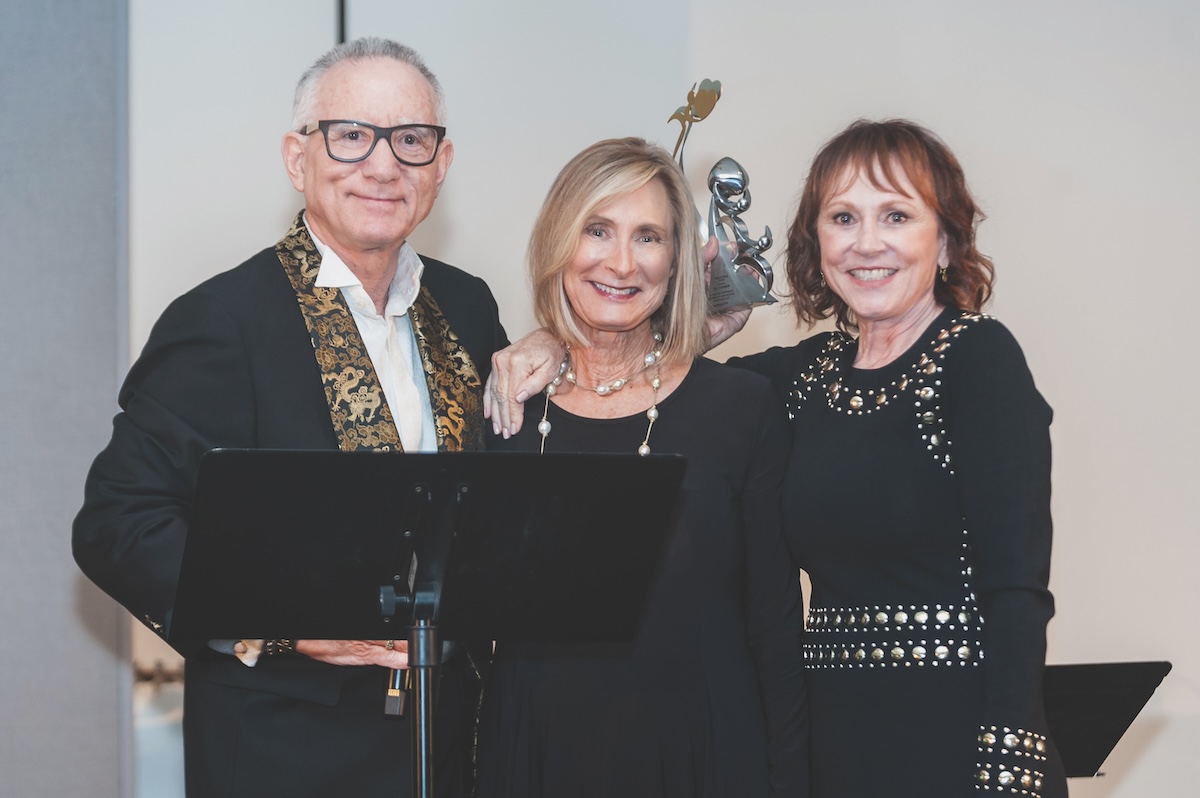
Gail Schenbaum had a long and storied career in Hollywood for over 20 years. During that time, she developed and produced award-winning television shows and films for notable studios such as Warner Brothers, Columbia, Universal, Walt Disney, Paramount, and 20th Century Fox, just to name a few.
She has donated regularly to charitable organizations that seek to end homelessness and food insecurity and to those that help to uplift education for all.
But a deeply personal experience catapulted Schenbaum from philanthropist into a founder of a nonprofit herself. One that would ultimately resonate with both teenagers and families, and combine Schenbaum’s love of education, business, and philanthropy.
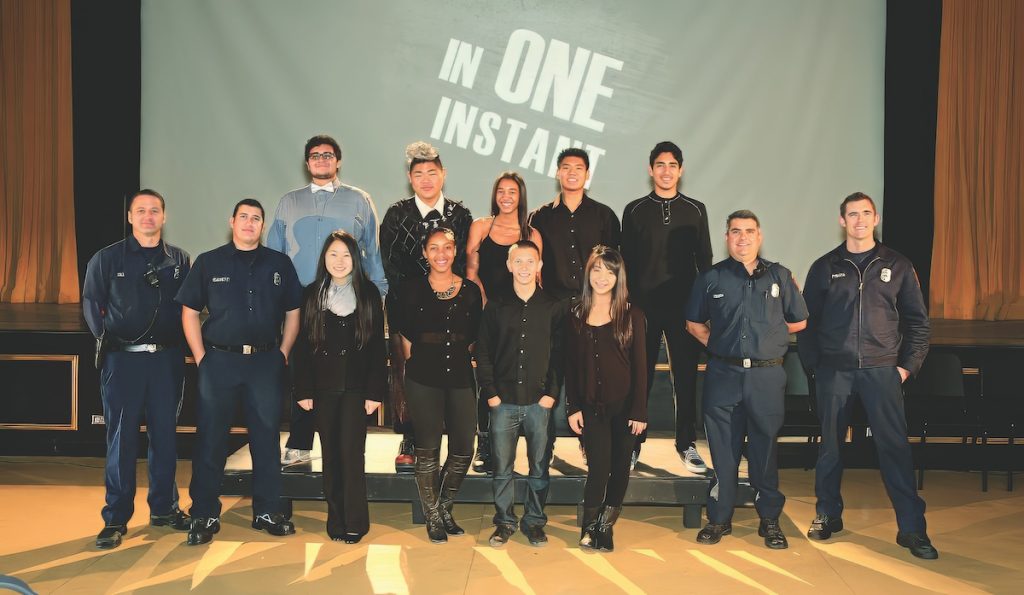
In this new role, Schenbaum became the co-founder and president of the nonprofit, In One Instant, a peer-driven teen safe driving program that has impacted over four million students in over 4,800 high schools. She also became the co-founder of Umergency, a health and safety app for college students and their families, which won the 2018 Media Excellence Award for Best in Health Tech.
Here’s our conversation with Ms. Schenbaum:
The Giving List: You have a lifetime teaching credential and a long list of successful entertainment credits. What made you pivot into your newest ventures that combine philanthropy with education and business?
Gail Schenbaum: I think a lot of people who start nonprofits do it because of a personal experience, and mine was the same. When my daughters were in high school, within a two-year period there were three fatal car crashes involving teens. We attended three funerals in those two years. The community – friends, parents, families – was devastated over and over again. I wanted to change that… It felt like the right time in my life to do purpose-driven work. That was my “aha” moment… I did some research to find out how prevalent teen car crashes were, and I discovered that nine teens died every single day in crashes. That was staggering to me. And while things have improved since then, it’s now around eight teen drivers dying every day (in 2023 there were about 3,048 teen driver fatalities)… I felt I could help change that. With my background in education, I started developing a plan. I realized that when you’re a kid, nobody wants to be lectured by an adult – you’re going to listen more if you hear the message from a peer. So, I decided to create a peer-driven program. I launched it in Los Angeles and got friends from the entertainment industry to help… We ultimately built a program that included a short film (which we keep updating) and supplemental videos. Drawing on my teaching experience, I reached out to educators and safety professionals to help develop the curriculum. My vision from the start was a “by teens for teens” program, and that’s exactly what we created.
TGL: How did your previous careers as both a teacher and an entertainment executive prepare you for your role in the nonprofit world?
GS: From my entertainment career, I knew how to produce a show and manage a team to achieve a goal. From my teaching career, I understood how to engage with teens – I love that age group. Teens aren’t set in their ways yet; you can reach them and spark that “aha” moment. Thanks to raising my own kids, I also learned how to really listen to teens and hear what they’re saying. All of that background made creating the program much smoother.
TGL: Rather than just volunteering your time or donating money, you focused on galvanizing change. Why was that the road you took?
GS: I didn’t think enough change was happening with the usual approaches. When I looked around at what programs already existed, most of them involved adults lecturing teens, and I didn’t see a lot of true engagement. I talked to educators to ask why that was. I even went to a Los Angeles Unified School District (LAUSD) meeting and asked, “Why aren’t the current programs working? What’s missing?” They basically said, “There’s nothing out there we really like.” So I set out to create something different – something that would truly connect with teens and make an impact, rather than just being another well-intentioned talk that teens might tune out.
TGL: What advice would you give aspiring philanthropists who want to effect change?
GS: I would say: start with what speaks to your heart. Figure out what you care about most and what change you’d love to see, because that passion will drive you. Also decide if you want to start something of your own, or if you’d rather join and support an existing organization – there’s no single right path… You have to follow both your heart and your head: once you identify the cause that matters to you, do your research. Look at programs you admire, learn from what’s out there. If nothing out there fits the bill, that may be your cue to step up and create the solution yourself.
TGL: Much of your philanthropy – including your original emergency app and now your latest endeavor, In One Instant – focuses on helping teens and by extension their families. Why has this sector been so important to you?
GS: I’ve always felt connected to teens and their families – we just “get” each other. I started my career as a high school teacher at 22, and even though I only taught for a few years (before I felt the pull to go into film and television), that experience stayed with me. Later on, I became a mother to two daughters and was very involved in their school activities. All of that reinforced to me that any program aimed at teens has to truly resonate with them if it’s going to work. My mission was to create something that really spoke to them, because if it spoke to them, it could save lives.
TGL: In your opinion, what more should philanthropy be doing to support and uplift teenagers? What’s still missing in the efforts to help the teen sector?
GS: I believe there are several ways philanthropy can better support teens:
• Engage all sectors: Embrace collaboration between corporate social responsibility initiatives and private philanthropy when it comes to helping teens. There are many competing priorities out there, and we need all hands on deck.
• Go beyond academics: Make room for learning opportunities that aren’t purely academic. We need complementary programs that recognize and amplify the youth voice in all types of leadership. Not everything that prepares a teen for life is taught in a classroom, and we should value those other forms of learning.
• Think nationally and locally: Support national organizations that have a local focus. In other words, big-picture programs are great, but they should be adaptable to local communities and realities.
• Listen to teens: Ask what success looks like from the teens’ perspective, and really listen. We should support organizations that elevate youth voices and the lived experiences of young people. Teens know what they need; we just have to include them in the conversation and act on their input.
TGL: What’s on the horizon for you? Are there any new philanthropic programs or initiatives you’re working on now?
GS: Absolutely. Just last year, we branched out with a big in-person event on the Wind River Reservation in Wyoming. Tribal lands unfortunately have some of the worst problems with drinking and driving. In fact, Fremont County (where Wind River is) has one of the highest per-capita rates of teen driving fatalities in the country. Our whole team went out there for a huge day-long safe-driving program. We partnered with the National Transportation Safety Board (NTSB) and the Wyoming Department of Transportation on it, and it was such a moving experience. Now we’re getting a lot of requests from other areas – especially rural communities, which often have very high teen crash death rates – to do similar day-long events. We’re exploring ways to make that happen. And even in places where we can’t put on a big event, we’re working on getting our program into those schools and communities in whatever format works best.
TGL: How has being a philanthropist impacted your life personally?
GS: It’s given me a very different kind of pride than I got from making a hit TV show or a successful film. This is a deeper, more lasting sense of fulfillment. I feel proud in a way that stays with me, knowing that our work has real meaning and might literally be saving lives. I also hope that by doing this, I can be a role model. Maybe someone else will see what I’ve done and think, “Hey, I can do something like that too. I can make a difference.” Because truly, anyone can find a cause and have an impact if they put their heart into it.
TGL: Sadly, you lost your home in the Palisades Fire, and you ended up seeing philanthropy in action from the other side. What were your observations?
GS: To experience philanthropy from the other side is quite humbling. I donate to many children’s organizations, to nature and the planet, food banks, education, the homeless, the Red Cross, but here I was receiving help and supplies from the Red Cross, YMCA, and funds from a charitable organization to help us move forward.
We escaped the fires with only the clothes we were wearing. The outpouring of love and support from family, friends, acquaintances, and strangers – many of whom quickly put together care packages, clothing, essential supplies – was beautiful. Companies donated many goods and volunteers from far and wide all showed up to do whatever they could to help. To be on the other side of it, to be the recipient of the giving, has given me a profound understanding on a very deep level of what philanthropy is all about. To experience firsthand the love, care, and selflessness that people exhibit when touched by tragedy continually brings tears to my eyes and fills my heart. I feel such gratitude.