
Fighting to End the Era of Megafires
When the 2018 Woolsey Fire ripped through the Santa Monica Mountains, then-state Senate staffer Matt Weiner watched flames burn with unprecedented ferocity, “unlike anything we’d ever seen,” and he quickly realized California’s wildfire crisis was overwhelming the systems built for a different era. Rather than accept megafires as fate, Weiner became convinced, “it doesn’t need to be this way.”

In 2022, he founded Megafire Action in Los Angeles along with George Whitesides, now a U.S. Congressman representing parts of L.A. County, who shared Weiner’s conviction that wildfires are solvable. Megafire Action’s perspective is refreshingly optimistic. “Unlike other climate disasters, we actually have agency… this is solvable,” Weiner says. Wildfires, he explains, are “a problem of our own making,” the result of decades of mismanagement and climate change. “The bad news is we’re causing this,” he adds. “The good news is we have the tools – and the responsibility – to fix it.”
Instead of fighting fires directly, Megafire Action and Megafire Institute are about prevention, targeting the conditions that fuel wildfires. They understand that policy change is a critical lever and push for smarter forest management – like prescribed burns – promoting fire-resilient communities, accelerating high-tech fire detection and suppression like satellites, drones, and prescribed fire robots. “There’s a wide range of areas where technology can help,” Weiner notes. It is an approach designed to avert the next mega-blaze before it starts.
From the outset, Megafire Action saw itself as an ally to veteran firefighters and land managers, a behind-the-scenes “force multiplier.” Weiner sees Megafire Action as complementing both first responders and policymakers advancing wildfire policy solutions. “We will work with anyone to get it done,” he says. This pragmatic, bipartisan, coalition-building style has opened doors in Washington and Sacramento.
Already, Megafire Action’s advocacy has yielded results. The group helped secure a $2 billion federal investment in wildfire resilience and has been instrumental in pushing the Fix Our Forests Act through Congress. Now the nonprofit is focused on ensuring the U.S. Senate passes the Fix Our Forests Act, as well as working in Sacramento – having recently launched a California chapter – to make affordable wildfire insurance more available for homeowners and to hold utilities accountable, issues at the top of Angelenos’ minds.
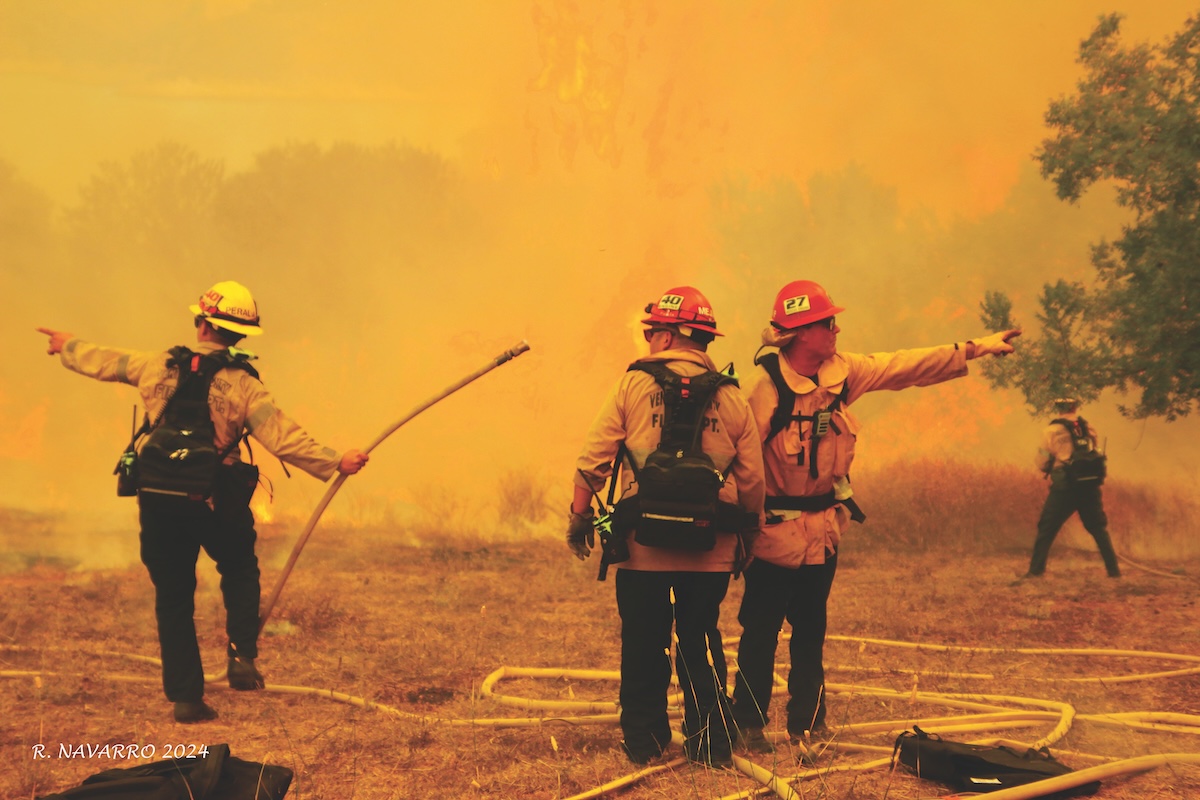
For firefighters, such changes cannot come soon enough. “We cannot keep putting communities in this untenable position,” warns Megafire Action’s Advisor to the Board Kelly Martin. Every fire season is “putting firefighters in an increasingly impossible and dangerous position,” exactly the scenario this team is working to prevent by fixing root problems and rallying resources.
Megafire Action
Donate now!www.megafire.org
Director of Strategic Partnerships: Kayla Calkins
Mission
To end the megafire crisis.
Begin to Build a Relationship
We know you care about where your money goes and how it is used. Connect with this organization’s leadership in order to begin to build this important relationship. Your email will be sent directly to this organization’s director of development and/or Executive Director.
You Can Help Prevent Fires
For Angelenos, this is a chance to change the trajectory of the wildfire crisis. Megafire Institute 501(c)(3) needs $275,000 to capitalize on opportunities for change in Sacramento and Washington, D.C. in 2026. Funding Megafire Institute will drive urgent California fire prevention solutions. Your donation will power science-based policy recommendations to ensure solutions are grounded in evidence and effectively address systemic policy reform in Sacramento to boost wildfire insurance affordability, expand fire-resilient communities statewide, and help build resilient landscapes. The impact: safer homes and communities from Malibu to Pasadena, healthier forests and wildlands, and fewer firefighters in harm’s way. The time to act is now.