Dr. Aaron Celestian: Pocketful of Xtals, Real-World Impact — How L.A.’s Natural History Museum Turns Mineral Science into Clean Soil, Public Health, and Sustainable Energy
Dr. Aaron Celestian didn’t always envision himself in a lab coat. In fact, as a teenager, he was laser-focused on becoming a professional golfer. A self-described “golf nerd,” he had the talent to go far – until an unexpected detour in a college classroom set him on a very different path. Celestian enrolled in a crystallography course and was instantly captivated. “Wow, this is amazing,” he remembers thinking. “I can do physics, I can do chemistry, I can do math – all while studying these beautiful crystal forms and shapes and understanding nature.” The intricate lattice of minerals hooked him in a way the fairway never could. He dove in headfirst, learning everything he could about crystals and discovering that mineral science pulled together many disciplines. His undergraduate advisor was a mathematician, his graduate advisor a chemist – an interdisciplinary foundation that set him apart from traditional geologists.
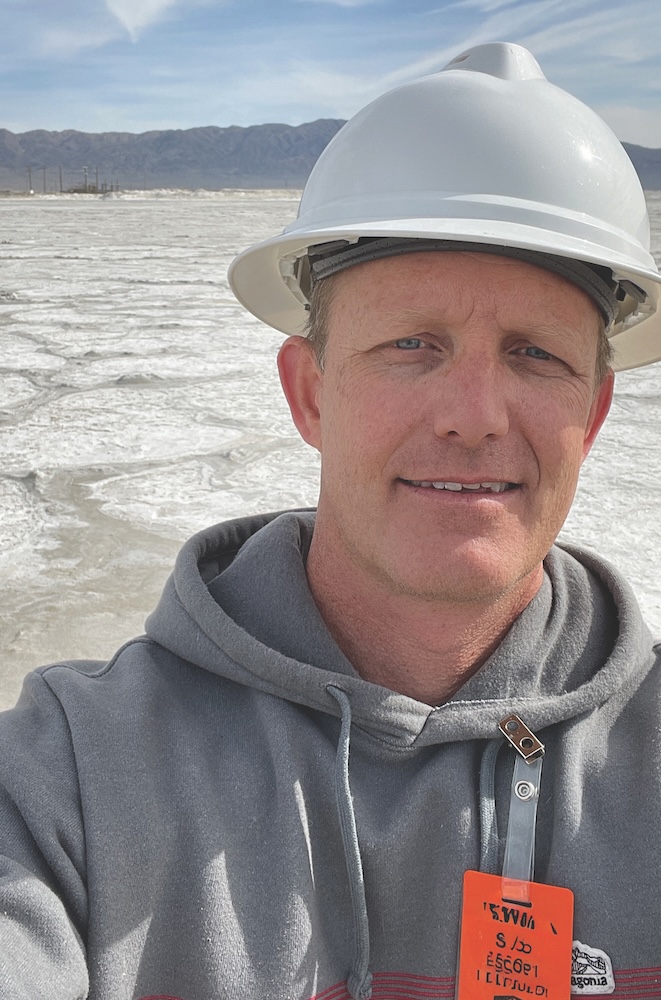
Celestian went on to earn a Ph.D. in geology and became a professor. But after nearly a decade in academia, he grew uncomfortable with the status quo. At Western Kentucky University, he watched oil and gas companies eagerly recruiting his geology students – not exactly the future he wanted for them or himself. “I really don’t want to train people to do that kind of stuff. That’s not my passion,” he says. Seeking more socially impactful work, he left tenure to direct an advanced materials lab, applying mineral science to real-world problems. That jump opened new doors: he even received a job offer from pharmaceutical giant AstraZeneca. But at the same time, the Natural History Museum of Los Angeles County (NHMLA) came calling – and with it, a chance to rewrite the rulebook.
In 2016, Dr. Celestian joined NHMLA as its Curator of Mineral Sciences, trading the corporate lab for the museum’s halls of gems. It was an unconventional choice, but the appeal was undeniable: the museum gave him carte blanche to pursue any research that intrigued him, backed by one of the world’s finest and largest mineral collections. “The job description [said] develop a research program about anything that I want…” So that’s what he did. In just a few years, one man’s passion for crystals has blossomed into bold solutions for community health, environmental cleanup, and climate technology.
Dr. Celestian’s work has ranged from cleansing toxic lead out of East L.A. neighborhoods to harvesting lithium from wastewater brine for sustainable energy. He’s even created a life-saving drug (drink) that pulls excess potassium from the bloodstream. Below, Dr. Celestian tells us how his crystal innovations are tackling some of today’s most urgent challenges. (And don’t miss his podcast – aptly titled “Pocketful of Xtals” – where he breaks down the latest in mineral science for the layperson.)
Tim Buckley: For those of us who don’t know the field, can you explain how crystals or minerals can be used to solve problems like pollution or health issues?
Dr. Aaron Celestian: Sure. It all comes down to a principle called molecular sieving. Think of a simple kitchen flour sifter – the mesh has holes that only let fine flour through and keep the clumps out. I design crystals that work on the same idea, but at the atomic scale. If you make a crystal with pores (holes) that are just the right size, it will let one specific kind of atom in and exclude the others. So if we want to remove a toxic element like lead or cesium from soil or water, we find or design a mineral with pores tuned to capture that element and ignore everything else. The trick is finding a mineral that only grabs that one atom and leaves all the good stuff behind – that’s why it can be difficult.
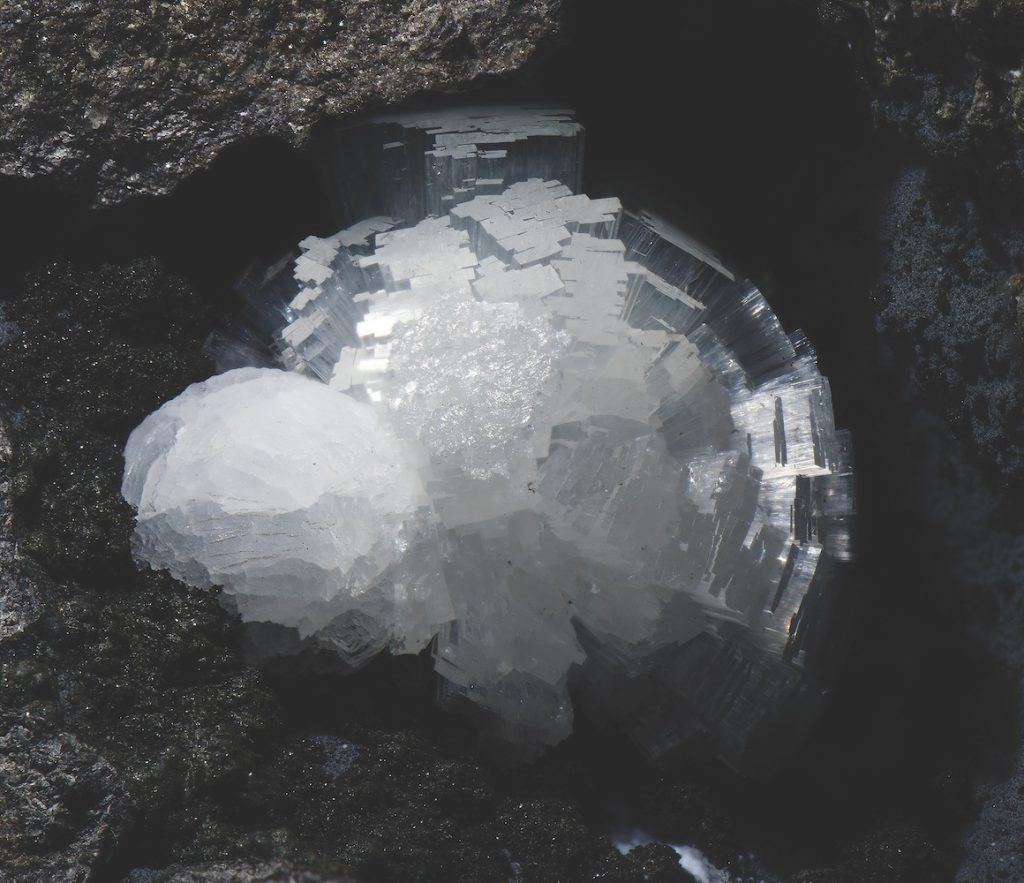
I take it a step further by essentially adding a trap door at the molecular level. When the target atom goes into the crystal’s pore, it pushes on a little molecular lever that closes a door behind it. The atom gets locked inside the crystal cage and can’t come back out. For something like lead in soil, that’s exactly what we want – the lead is trapped permanently and taken out of play, biologically speaking. If a person or animal accidentally swallowed those lead-laden crystals, they’d just pass through the body and carry the lead out with them. On the other hand, for something valuable like lithium, we do want to retrieve it eventually. So in those cases we design the material a little differently – the crystal will still selectively absorb lithium, but when we add a specific extra chemical, it triggers the crystal to open up and release the lithium on command. In a nutshell, it’s like having a sieve that can trap what you don’t want, or collect what you do want, and hold onto it until you’re ready to release it.
TB: One of your recent projects tackled a very local problem – lead contamination in East Los Angeles. How did the museum end up involved in cleaning up lead in the soil, and what exactly did you do?
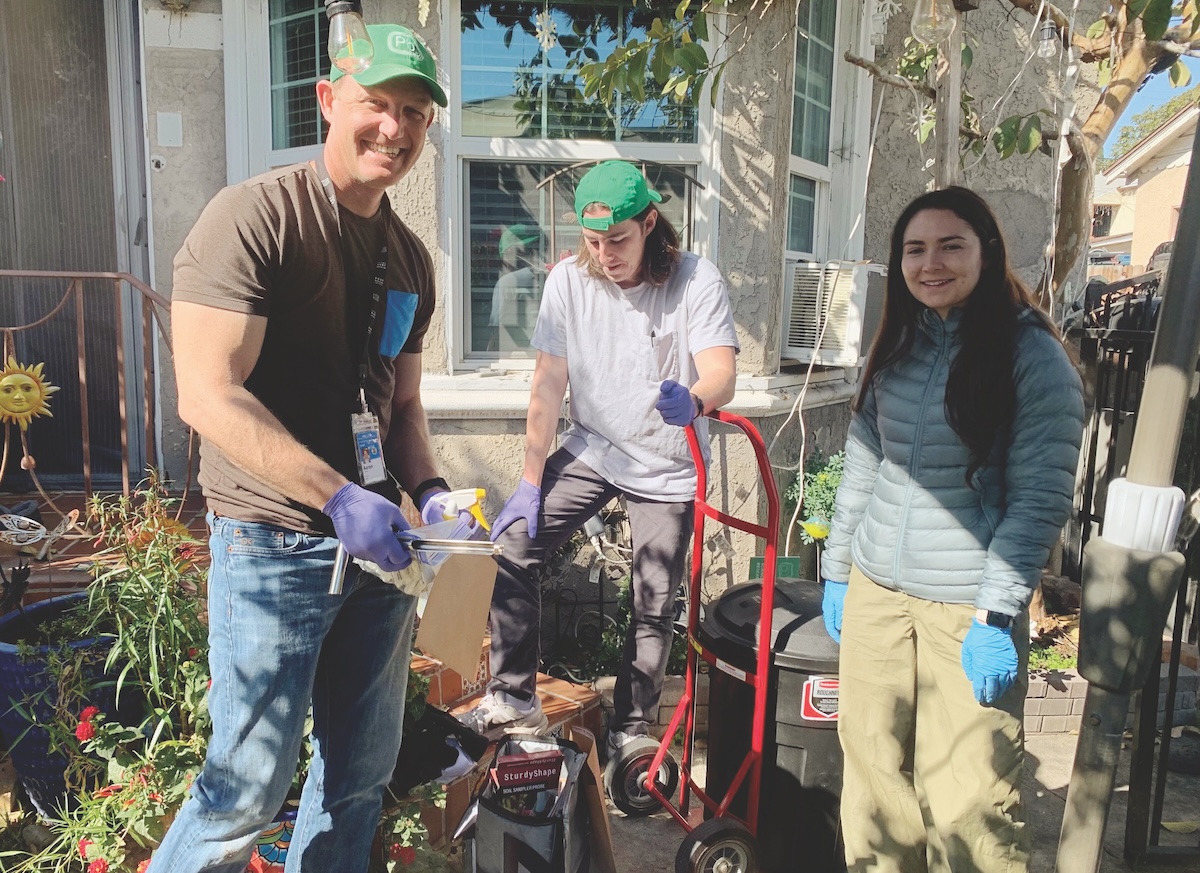
AC: That came about in a pretty roundabout way. It actually started with an artist. She was leading a community art project funded by a Getty grant, aimed at helping residents in East L.A. deal with soil contaminated by lead (from old industrial pollution). She wanted to use natural materials somehow, but didn’t know how to start. By chance, she came on a tour of our museum and I was asked to talk about some of my work – including a project I’d done in Fukushima, Japan, dealing with radioactive cesium in soil. As soon as she heard that, she said, “Oh my gosh, this is exactly what we want to do.” We basically teamed up on the spot. That collaboration was absolutely critical – scientists don’t go out into the community and say, “Hey, I can fix your problem,” out of the blue. But through the artist and her project, we connected with residents who wanted to work with us to learn more about how to address this issue.
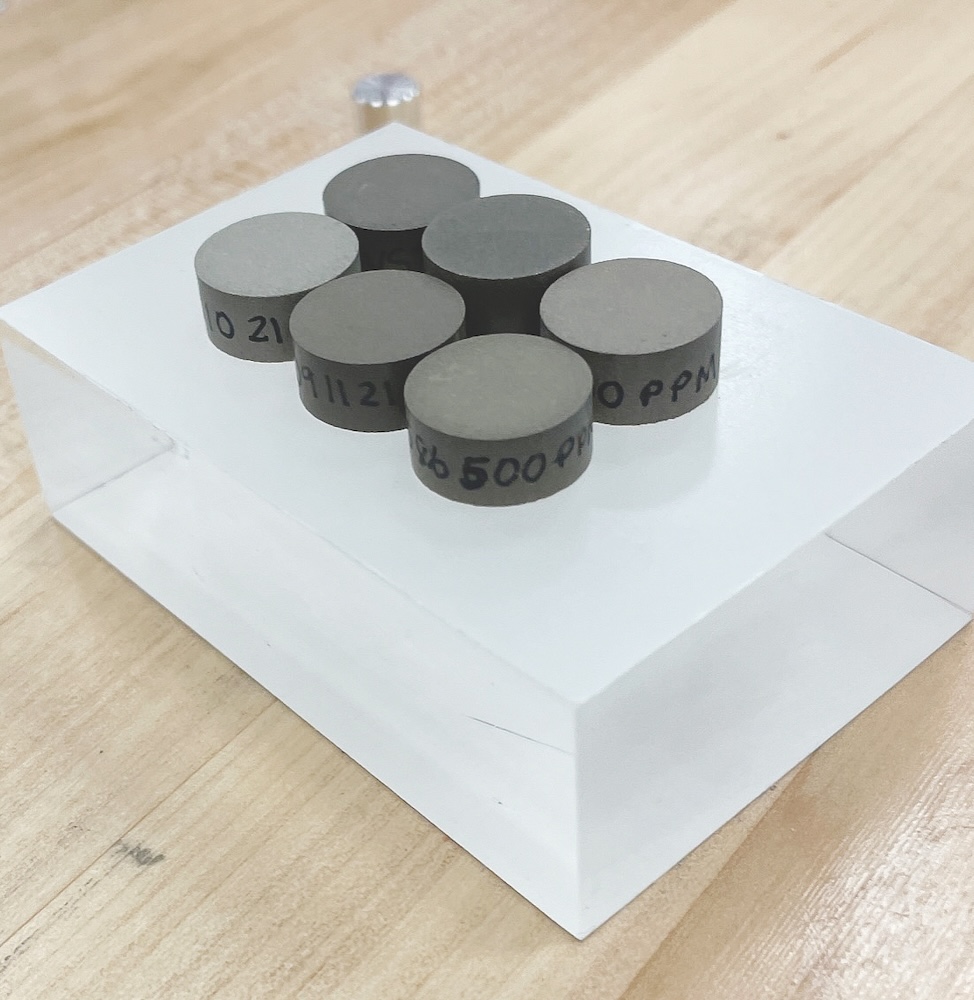
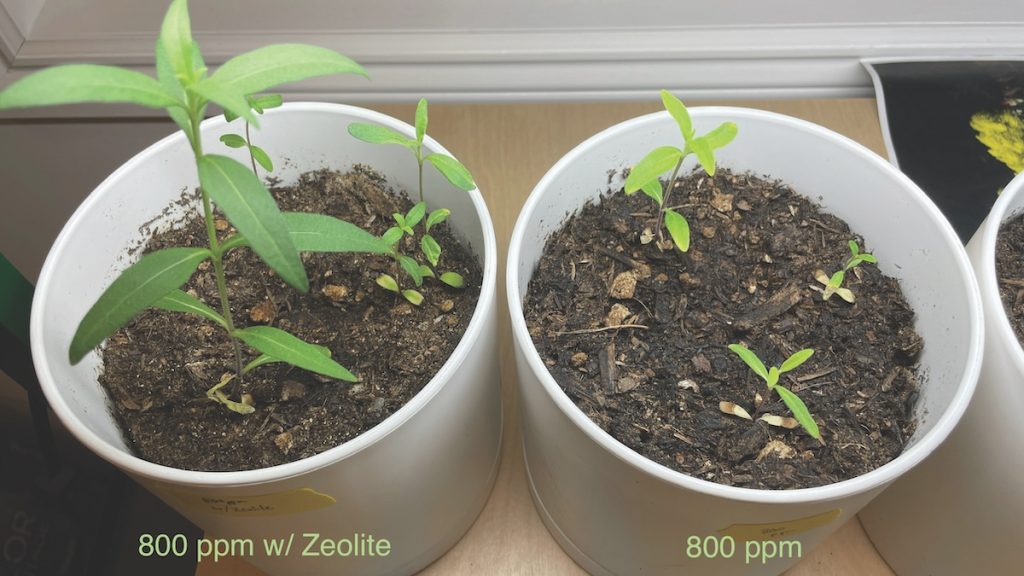
Then it took about a year of research and testing to find the right mineral for the job. We had a long list of requirements: it had to be cheap, nontoxic, easy to use, easy to apply, and abundantly available, because we’re talking about treating entire yards and neighborhoods. That’s a tall order! We eventually identified a type of zeolite mineral that fit the bill. We even found a mining company that excavates this zeolite, and they were so on board with the project that they donated about four tons of it to the museum for us to use. We worked with local families and basically acted like gardeners applying a new soil treatment… a light dusting on top of the soil. The story actually made the front page of the L.A. Times, with a photo of us broadcasting this mineral dust across a yard.
We kept testing the soil and made sure the lead was being locked up by the crystals. It was. The lead’s still in the soil (we didn’t physically remove it), but it’s been chemically “taken out of action” – bound up in the crystal so plants or kids can’t absorb it. And we saw no negative side effects. Now that word is getting out, I’ve started working with other partners on similar ideas – for example, I’m talking with a cement company about using this mineral in concrete, and we’ve begun helping farmers as far away as Trinidad and Tobago use minerals to reduce cadmium and lead uptake in their crops. It’s exciting to see an L.A. museum project ripple out globally.
TB: Speaking of turning pollutants into something useful, you’ve also developed a crystal for lithium extraction – essentially mining lithium from wastewater brine. How does that work, and what’s the goal?
AC: The lithium project is one of my favorites. The material we’re using is actually based on a gemstone – a mineral called spinel. Spinel is the crystal structure of some famous rubies and sapphires (like the British crown jewels). We modified it chemically so it’s no longer a pretty ruby red; it’s jet black. But it kept that same crystal structure, and the amazing thing is it spontaneously absorbs lithium. You just put this crystal into water, and it will scavenge lithium ions out of the solution – and it’s very selective, it really only grabs lithium and not the other ions. It also works fast, which is a nice bonus.
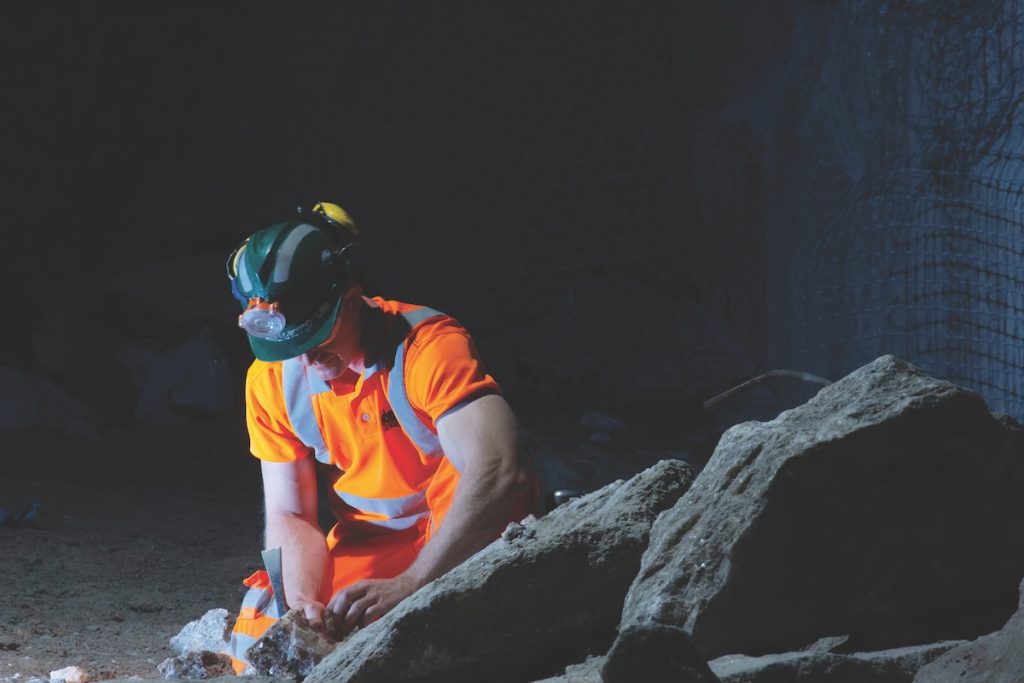
Now, if you put it in ordinary seawater, it would pull out lithium (lithium is naturally present in seawater in tiny amounts). But where this gets really exciting is pairing it with desalination plants. Here in California, desalination plants take in a huge volume of seawater and produce fresh water, and they spit out a super-concentrated brine as waste. That brine is literally a gold mine of metals. All the minerals in the seawater get left behind in a much higher concentration. If we can process that brine before they dump it back into the ocean, we could extract valuable elements like lithium and prevent some pollution. It’s a win-win: economically beneficial (you get lithium, which is in high demand for batteries) and environmentally beneficial (you’re not returning as many heavy metals back to the ocean). We can use our crystals to clean that water and recover the lithium at the same time.
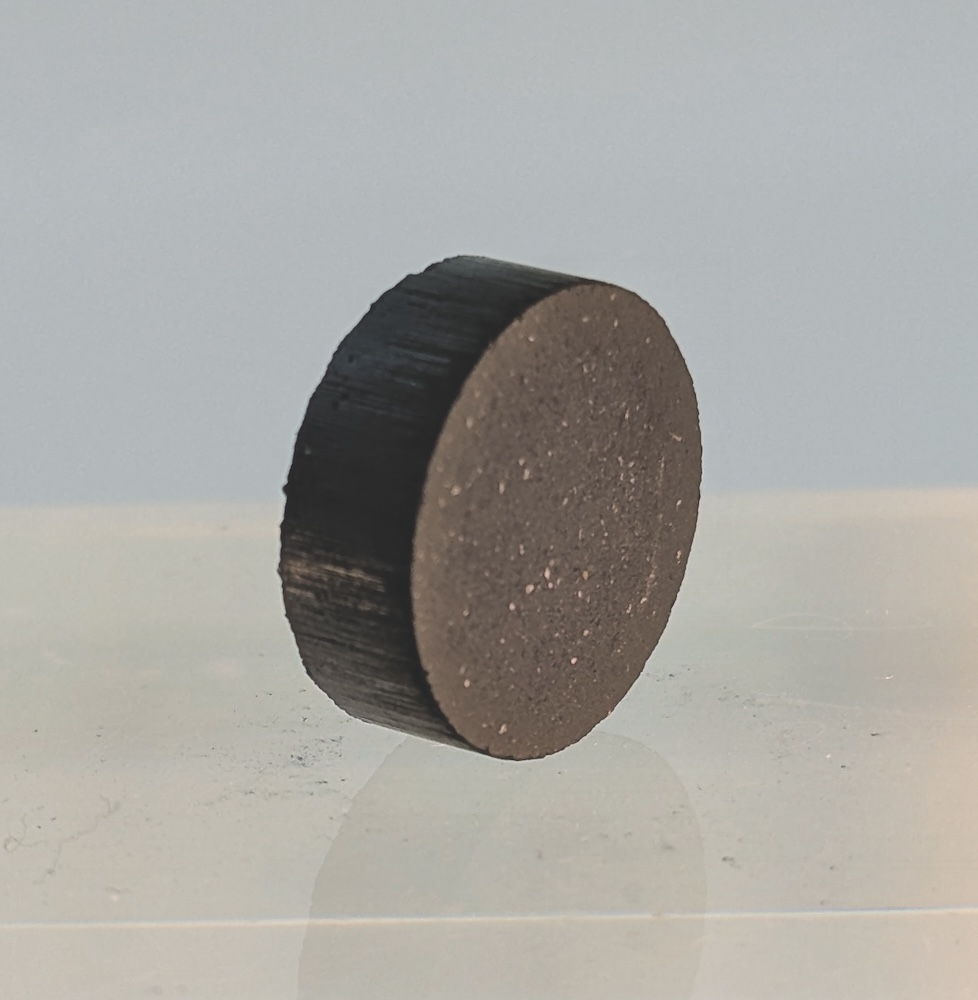
To get the lithium back out of the crystal, we use a simple trick of chemistry. We’ve found that pushing carbon dioxide through the material – essentially bathing it in a carbonated solution – will make the crystal release the lithium it captured. In the lab we capture CO2 from the air and dissolve it in water to form a weak carbonic acid; flushing that through the crystal knocks the lithium back out. The bonus is that we’re sequestering CO2 in the process (turning it into benign carbonate). So overall, the energy and carbon footprint of this lithium-harvesting method is much smaller than traditional lithium mining or evaporation ponds. To me it feels like a best-of-both-worlds scenario – we’re taking something viewed as waste and turning it into a resource, while also cleaning up the environment. Now, I’m an ideas and materials guy; I can’t scale this up to industrial levels on my own. So I’m working with outside partners – companies, government agencies – to hopefully make it a reality on a large scale.
TB: On the health front, one of your crystal discoveries has already become a life-saving pharmaceutical. I’m talking about the new potassium-binding drug that can prevent heart attacks – the one now stocked in ERs and ambulances. What is that, and how does it help people?
AC: Yes! That’s a potassium-regulating crystal we characterized – it’s now an FDA-approved drug called Lokelma (sodium zirconium cyclosilicate) for treating hyperkalemia, which is high potassium levels in the blood. In fact, I was at a drugstore recently and saw Lokelma on the shelf behind the pharmacist – that was a proud moment. I’m still under some NDA restrictions so I can’t go into the exact formulation, but essentially it’s the same idea we’ve been talking about: a molecular crystal designed to selectively absorb potassium from the bloodstream. It works extremely fast, so it can serve as a rescue drug in emergency situations (like when someone’s potassium spikes to dangerous levels). They formulated it as a powder you drink – I was told it’s chocolate-flavored, believe it or not – and once the minerals enter your gastrointestinal tract, they start pulling potassium out of your blood. The potassium gets captured by the crystal and then the whole complex just passes through your system and exits through your kidneys – you basically pee it out.
This is hugely important for patients because too much potassium in the blood can be deadly. Potassium is critical for muscle function – including your heart muscle. If your potassium is too high, it can cause your heart to go into arrhythmia or even stop (cardiac arrest) without warning. That’s why hyperkalemia is such a concern in kidney disease and other conditions. This drug sieves up the potassium: it grabs the excess so your levels come back to normal, and it won’t remove too much because it reaches a balance point (equilibrium) and just stops at a safe level. It’s literally saving lives by preventing heart attacks and cardiac deaths in patients with high potassium. For me, it was the first time I applied my geology knowledge to a health science problem, and seeing it go from the lab to ambulances and hospitals has been incredibly satisfying.
TB: Your work really illustrates how a museum can be a hub for real-world problem-solving. You’re based in a museum, but you’re collaborating with universities, companies, community groups – even artists. How does working at a museum enable this, compared to a traditional academic or industry setting?
AC: There’s often a disconnect – academics don’t always show how cool and applicable science can be in solving everyday problems. Museums can step in and fill that gap. Here at the Natural History Museum, we’re evolving constantly and we’re very interdisciplinary. I might be working with dinosaur fossils one day and new mineral materials the next. We have experts in zoology, paleontology, mineralogy all under one roof, and we cross-pollinate ideas. It’s not siloed at all. That creates an environment where we can address new kinds of questions and careers that are emerging out there in the world. As the job market evolves, a museum like ours can show young people: hey, here are some amazing things you can do in science – even things that didn’t exist as a “field” when I was in school. We’re not stuck teaching out of the same textbooks year after year; we’re showcasing the cutting edge, in real time, in a way that’s accessible.
People sometimes think museums are just old, dusty boxes of artifacts, but that’s far from the truth. We’re actually on the cutting edge of science – just without the pressure to churn a profit like industry or the pressure to publish esoteric papers to get tenure like academia. We can pursue projects that have real-world impact and also communicate them to the public in engaging ways.
The museum has given me freedom to explore and a platform to connect. I’m working with everyone from local teachers and artists to engineers at NASA’s Jet Propulsion Lab. (True story: we have proposals to help analyze samples from Mars and even to design new drills and microscopes for space missions.) We’re showing that a museum can be more than a collection of displays – it can be a community hub where science actually happens and where anyone can get involved.
TB: All this groundbreaking work doesn’t happen in a vacuum. How do donors and supporters factor in? Specifically, what is the Gem & Mineral Council I’ve heard about, and what role does it play in your research?
AC: The Gem & Mineral Council is absolutely essential to what we do. It’s basically a group of museum supporters who are passionate about mineral science and want to be part of it. They work with me – even directly in some cases – to help push forward our research, and in return they get to enjoy special content and behind-the-scenes access to some of our most exciting work. Practically speaking, their contributions fund a lot of critical needs. For instance, they help us grow our mineral collection, keeping it world-class by acquiring new specimens that are important for research or dazzling pieces for our exhibit hall. Acquiring a rare mineral sample can be expensive, so having donor support there is huge.
They also support our educational and outreach programs. We create fun public programs around gems and minerals – from mineral ID days to showing off meteorites – and the Council’s funding helps make those possible. Importantly, their donations help support student researchers and interns in the mineral sciences department. I currently have a few students working with me (some from local community colleges), and being able to provide stipends or equipment for them often comes down to donor-funded resources. In fact, the X-ray diffraction machine we use – a crucial piece of equipment for discovering and analyzing new minerals – was originally purchased by a donor about 15 years ago, and it’s now aging. We’re looking to fund a new one, and that kind of big-ticket item is something grant funding alone might not cover. Donor support can make it happen.
Beyond the dollars and instruments, I truly think of Council members as thought partners. They often have perspectives from business, medicine, or other fields and they challenge me with new ideas or applications I might not have considered. It’s a journey we invite people to join – you don’t have to be a scientist to make a difference here, you just need that passion to learn and support discovery.
To learn more about Dr. Aaron Celestian’s work – or to support the Natural History Museum’s mineral science research and community initiatives through the Gem & Mineral Council – please visit the Natural History Museum of Los Angeles County’s website: nhm.org