Reaching Every Child Who Wants to Make Music
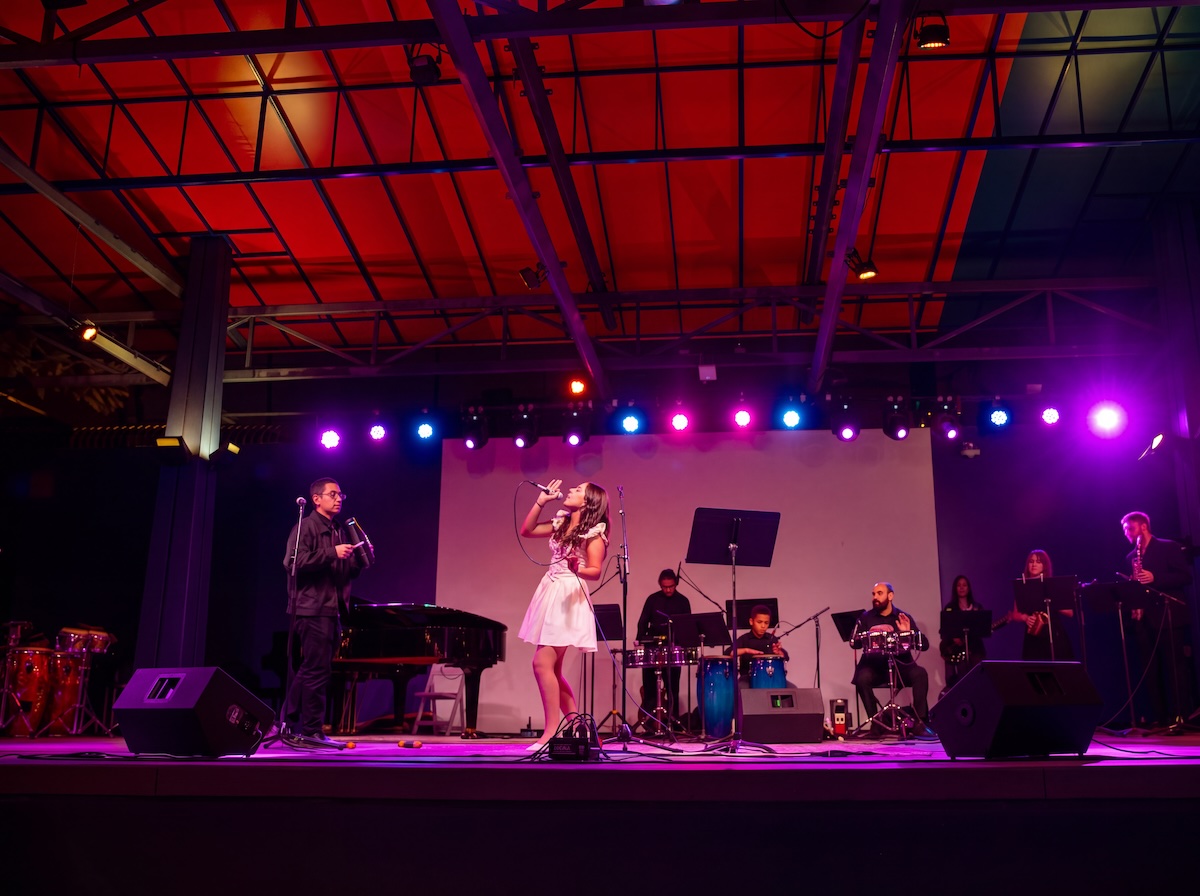
Twelve-year-old Celeste walked into the Neighborhood Music School in Boyle Heights in 2019 wanting to belt out Broadway tunes. Seven years later, she is in her first year of college and was just accepted into the highly competitive LA Youth Philharmonic summer program. Now she sings opera, in Italian and Spanish, on full scholarship.
Neighborhood Music School has been making transformations like Celeste’s possible since 1914, when a pianist and composer named Carrie Stone Freeman founded what was then called the Los Angeles Music School Settlement. Almost 20 years later, the school moved into a Victorian house on South Boyle Avenue and forever changed the community and how music is taught.
“Suddenly she’s learning Italian, she’s learning Spanish, she’s learning all of these things, and she’s amazing,” says Karen Louis, the school’s executive director. Celeste is one of more than 4,000 students Neighborhood Music School serves across Los Angeles County each year, including through outreach programs that take the school’s mission well beyond the Victorian’s walls.
Standard tuition today is just $68 a month. The school’s robust scholarship program brings it as low as $5, or to nothing at all. Most weeks, the Victorian runs at its 450-student capacity.
Music as Human Connection
As demand grows, the Neighborhood School has begun expanding to serve more students and reach a broader community. The largest of the school’s recent expansions is its role as the Los Angeles implementation partner for the D’Addario Foundation’s national Immersive Music Challenge, a multi-year study of what consistent after-school music instruction does for elementary students in lower-income neighborhoods. The program begins in second grade and follows each cohort through fifth.
The school’s reach extends in other directions, too. At the John Tracy Center in West Adams, Neighborhood Music School’s teaching artists bring weekly music instruction to toddlers and preschoolers with hearing loss. The school has also partnered with USC Keck Bionic Ear Lab and their Cochlear Implant Music Hour to help adults navigate their devices and rebuild their relationship with music. Some of those participants were musicians before they lost their hearing.
“It’s all human connection,” Louis says. “It’s all connecting ourselves to music, to our humanity, and to our joy. That’s the thing that brings it together.”
Nowhere is that human connection more potent than in the classrooms of the Victorian itself where teachers, like Frank, a local musician who grew up in Guatemala and the United States, bring out the best in their students. Frank regularly drifts to the corner of a group class and sits beside the one student who is struggling to help them find their way.
“His strength is going one-on-one within the classroom,” Louis says. “That’s really where he connects. It’s just beautiful to watch.” Frank’s story is, in Louis’s telling, not unusual. “While there’s all this amazing stuff happening with the students, it’s also the teaching artists who become deeply impacted by this work.”
Neighborhood Music School Association
Donate now!www.neighborhoodmusic.org
(323) 268-0762 Ext 7
Executive Director: Karen Louis
Mission
Neighborhood Music School inspires minds and enriched community through music education.
Begin to Build a Relationship
We know you care about where your money goes and how it is used. Connect with this organization’s leadership in order to begin to build this important relationship. Your email will be sent directly to this organization’s director of development and/or Executive Director.
I began studying music at Neighborhood Music School when I was 12 years old. I was mostly interested in pop music, and didn’t think much further than that. My teachers encouraged me to grow. I fell in love with opera and spent this summer with the Los Angeles Youth Orchestra
Keep the Door Open at Five Dollars a Month
Tuition at Neighborhood Music School can start as low as $5 a month, but only because donor support makes up the difference. Scholarship and outreach are the school’s largest unmet needs. Here are the ways you can help:
- $1,000 to the Carrie Stone Freeman Founders Circle honors the school’s founder and matches her original gift.
- $5,000 underwrites six weeks of tuition-free classes for a student.
- $10,000 fully underwrites a tuition-free ensemble for the year.
- $25,000 funds a 10-week residency at a school that would otherwise be unable to afford one.
Key Supporters
The Margie and Robert E. Petersen Foundation
Perenchio Foundation
Find Your Light Foundation
The Clarence E. Heller Foundation
Snap Foundation
City of Los Angeles Department of Cultural Affairs
Los Angeles County Department of Arts & Culture
California Arts Council
Ralph M. Parsons Foundation
D’Addario Foundation
Arts Access LA
Mawardi Foundation
Pasadena Showcase House for the Arts