Karen Gaspin: A Quiet Force – Helping in Whatever Way She Can
People navigating life’s most difficult chapters – illness, abuse, loss – may not know Karen Gaspin by name, but many have felt the quiet force of her presence. Over the years, her volunteer work has gravitated toward the kinds of spaces most people instinctively avoid: crisis centers, domestic violence shelters, animal shelters. It’s work that is intimate, often invisible, and, as she tells it, deeply grounding. “To be useful in those moments,” she suggests, “is its own kind of privilege.”
Gaspin’s path into philanthropy was not entirely linear. While raising three children, she built a parallel career in public relations, in event production, and as a freelance writer focusing on lifestyle, people profiles, and travel articles. Those dual roles brought her into orbit with a wide range of charitable organizations and she found herself volunteering for many worthwhile nonprofits. Among them, she served on the Advisory Board for the David Labkovski Project, worked in a volunteer capacity for the Jewish Family Service’s domestic violence hotline, after completing a 40-hour, CA-state mandated training class, and she volunteered with UCLA’s Stuart House and Cancer Schmancer.
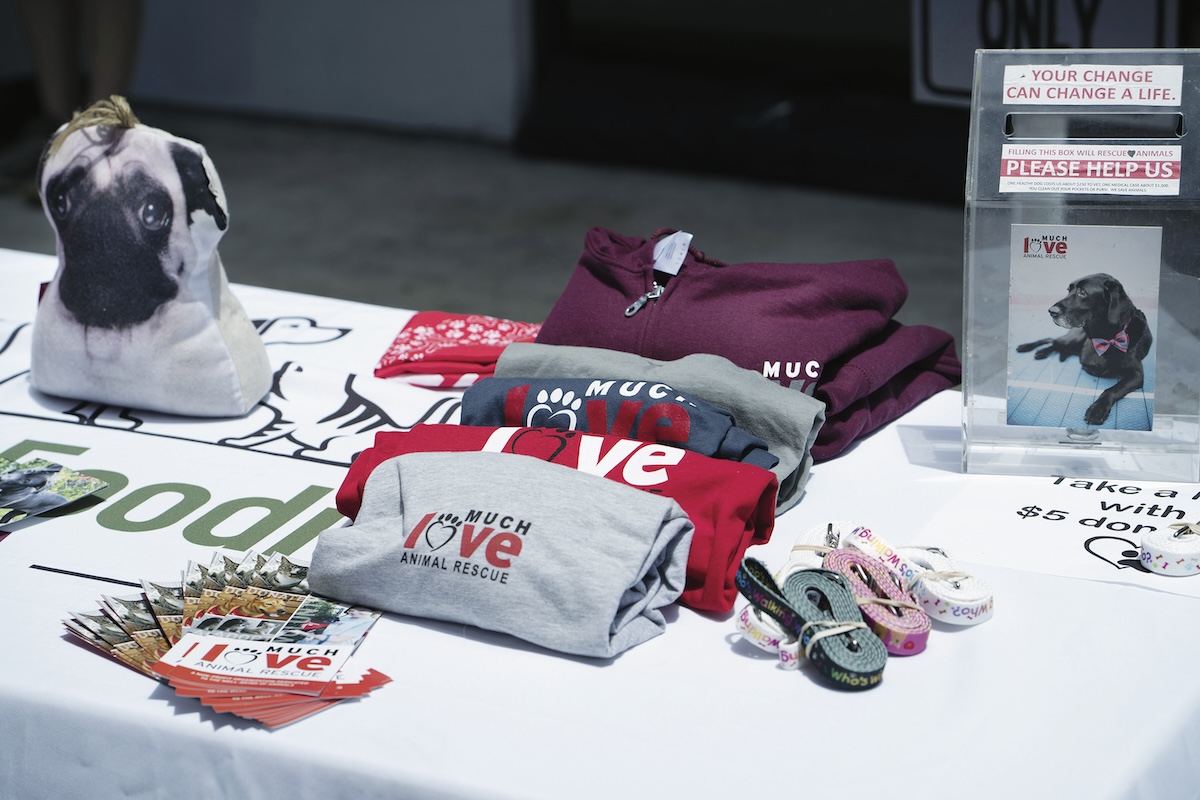
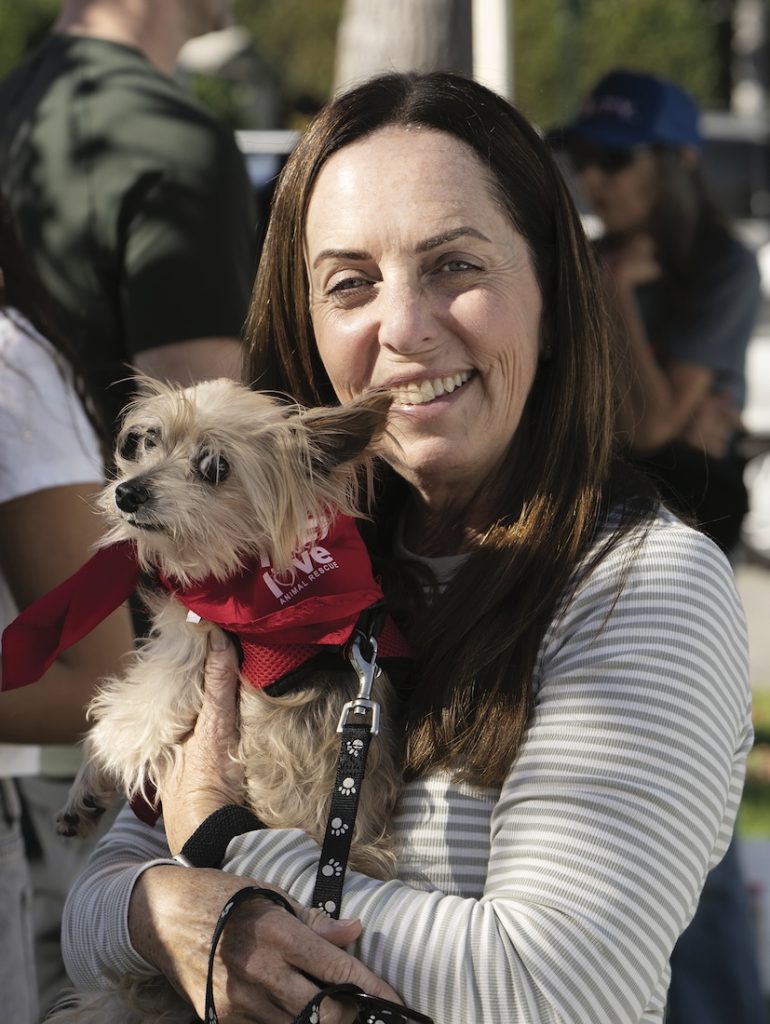
Like many volunteers, she was eager to find the right “volunteering” fit for herself. She found it, ultimately, at Much Love Animal Rescue in Los Angeles, where she now works alongside a small, tightly knit team placing dogs and cats into permanent homes and where she serves on their Board of Directors. It’s a role that is, in its own way, as emotionally charged as her earlier work. Even now, she admits, she still tears up at adoptions – the quiet culmination of a long chain of care, and, for her, a reminder of why she keeps showing up.
Zachary Bernstein: You found volunteering by way of event production. What was it like as the two began to converge?
Karen Gaspin: I tried getting involved as a volunteer with a few different nonprofits and I hate tosay it, but I found it hard at first to break into the volunteering world. There would generally be a hierarchy by the time I showed up. I came into these organizations where there were a lot of people already volunteering. What I really wanted to do was work somewhere where I could be part of a team.
ZB: But eventually, you found yourself getting involved with Much Love Animal Rescue. How was that a deviation from your previous experiences?
KG: I decided that I wanted to volunteer for a dog rescue prior to meeting the Much Love people. Other places were hard to get into. Some of them had application processes that, I felt, were kind of over the top for a dog rescue and they’d say, “We’ll call you if your application meets our needs.”
About 10 years ago, I was at the Santa Monica mall and I ran into a Much Love adoption event. I started talking to the women who were running it and expressed my interest in getting involved. They invited me to play with the dogs and they told me to come to one of their adoption events. So that’s really how my association with Much Love started. I started as just a volunteer who would show up at the Sunday adoption events in Santa Monica.
I lived in Calabasas and I would go down and just show up there. It was a 45-minute drive and people would say, “Are you crazy?” I didn’t really know anyone there, but, ultimately, I loved being with the dogs and I loved talking to the people that came to the events.
Over the years, some of the upper-level volunteers went elsewhere and I became much closer with the people who were running the organization. I’ve been on the board now for about five years.
ZB: After all that searching, you found your winning volunteer organization.
KG: I’m not going to say that if I got involved in another one, I wouldn’t have gotten to this point, but Much Love was inviting to new volunteers.It’s just an amazing group of people. They’re extremely dedicated. And it’s fully volunteer, nobody gets paid. We’ve sort of curated this amazing team of younger people who have come in and taken on roles that have progressed the organization.
ZB: Looking back on your own search for the right place, how would you structure a nonprofit to make it more inclusive to new people who want to join?
KG: At Much Love, we invite anyone who wants to volunteer. We tell them to fill out an application on our website, a questionnaire really, that asks things like, “What are your strengths?” “Do you drive?” “Can you transport animals?” “Do you want to come to an adoption event?” “What do you want to do?” We make it very easy.
It’s important to be collaborative and shed your ego. Everyone is working the same amount and we’ve all found our roles. That’s what’s really propelled us forward in the last two years. You can’t do everything. We’ve kind of narrowed that down and really focused on what everyone’s strengths are.
ZB: I want to take a step back and look at all the other volunteering organizations you’ve given your time to. You volunteered for Fran Drescher’s Cancer Schmancer Foundation, Stuart House for children who are victims of sexual abuse, and you even answered calls on a crisis hotline at Jewish Family Service. Each of these places center around helping people dealing with some heavy trauma. Why do you think that you’re the kind of person who can handle this kind of volunteer work?
KG: I will say it does take a toll because I feel a tremendous amount of empathy for people in those kinds of situations, in health situations, in crisis. I feel that I’ve been extremely lucky and blessed with good health, wonderful family, and financial stability. Many others are not in that situation and I just feel that I can help them.
I’m always looking for a volunteer situation where I can directly impact the people that the organization means to help. I have a background in PR, so I’ve been asked by other organizations to help write press releases. That’s important, too, but here, I felt moved to help the people in need.
ZB: How has your philanthropic involvement affected other facets of your life?
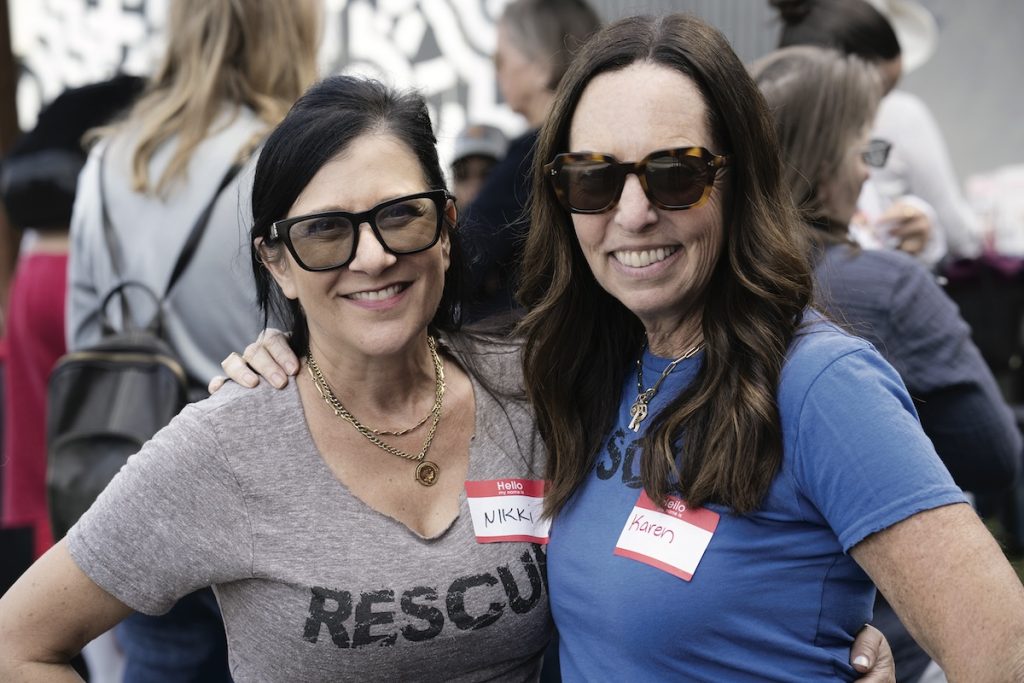
KG: It’s interesting because a lot of people ask me why I volunteer so much. I think a lot of people see that – and whether they admire it, or think I’m foolish, I don’t know – but my kids certainly admire it and they help out where they can. They often come to our adoption events. My younger son just fostered his first puppy – that was a whole family affair. They’re all giving and trying to help where they can.
And it’s because of their involvement that I can see that my family knows why I do this. I think they know that they’re all very lucky and blessed. You can’t take anything for granted. I just want to help other people that may not be as fortunate as we are.
ZB:What would you tell people who want to be directly impactful to people with their volunteering as you have been?
KG: My problem when I first tried breaking into volunteering was that I just expected everyone to say, “Sure, come volunteer.” And it was much more difficult than that. Sometimes I’d hear something like, “We have our team in place, so we’ll call you if we need help.”
I now have a few friends that just retired and they don’t know what to do. This is what I tell them: First of all, I think you have to be very clear in your own mind of what you’re trying to get out of volunteering. Some people want to be behind the scenes and just help out where needed. I’ve never felt that was enough for me personally, but that’s okay if someone else does. Then figure out what area you want to volunteer in. Do you want to work with kids? Do you want to work with seniors? Do you want to work with animals? What can you offer to this organization that you could kind of promote yourself for?
You have to have a realistic idea of what volunteering means for you. What do you want to get out of it? What do you want to give to the people that you are working with? How much time do you want to invest? That’s a big thing. Do you want to be on call when they need you, or do you want to be a big part of the group?
ZB: On a final note, I read that the City of Los Angeles Animal Services estimates that at any given time there are 26,000 to 44,000 stray dogs roaming the streets of Los Angeles. What do you think our community can be doing, on a larger basis, to help combat this crisis?
KG: Helping to fund spay and neuter clinics and advocating for all Los Angeles residents to spay and neuter their animals. All of the L.A. County animal shelters offer free spay and neuter certificates. Of course, there are so many unhoused people in our city that have animals, and that is a challenge to provide services to that community. Also, having our animals microchipped can save a lot of time and heartache if they ever get lost. If anyone finds a stray or lost dog or cat, the first thing they should do is take the animal to a local vet where they can scan very quickly for a microchip.