Georgia Van Cuylenburg: Reframing the Volunteer Experience
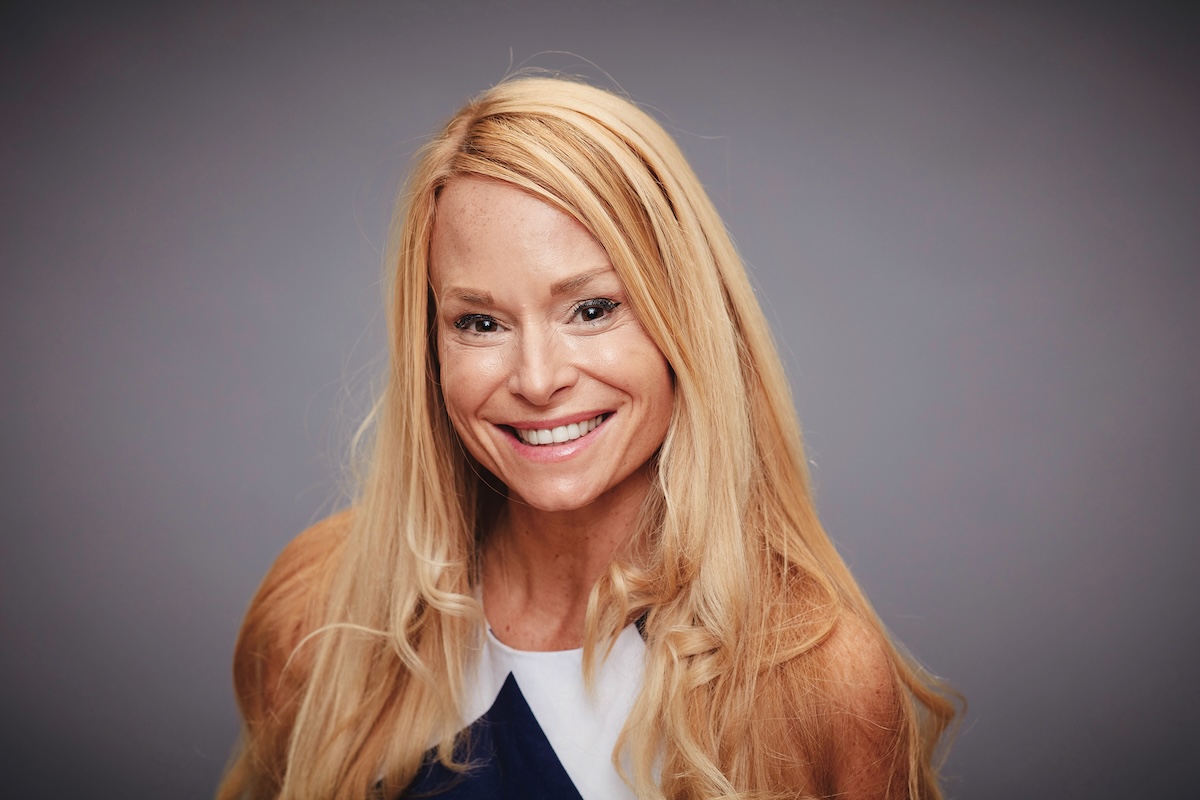
There are MVP volunteers, and then there are volunteers like Georgia Van Cuylenburg. An actress, TV host, comedian, and producer, Van Cuylenburg just as seriously takes on the roles of philanthropist and activist, dedicating her life to uplifting communities facing unjust social conditions.
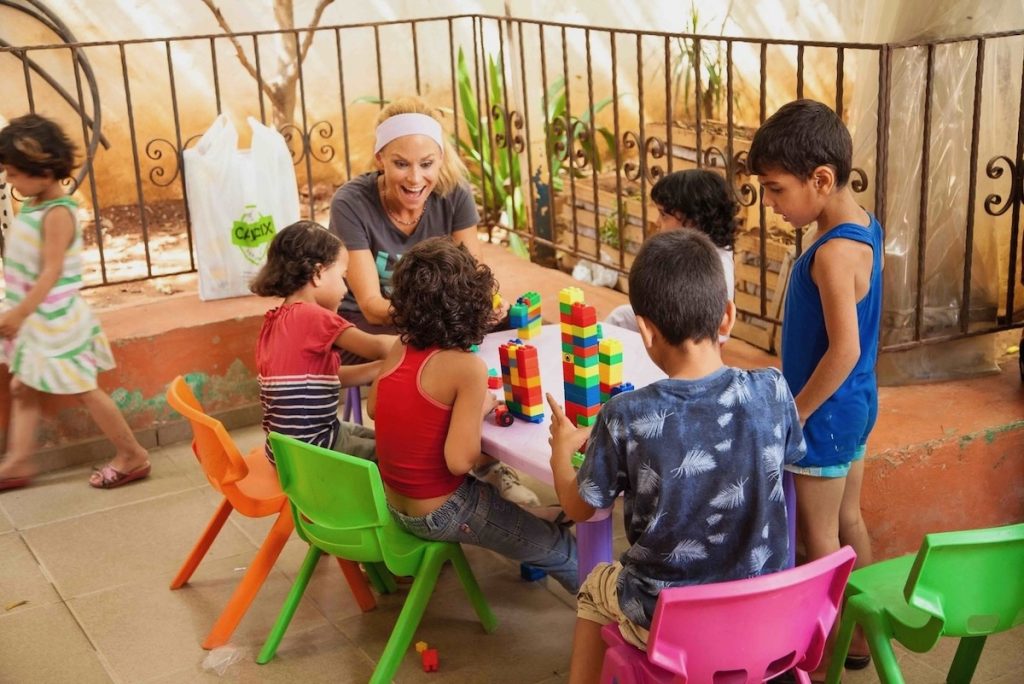
Originally from Australia, Van Cuylenburg moved to Los Angeles when she was 18 to pursue her acting career, but she arrived on American shores with an additional mission: To use her performance skills as a way to spread positive messages for children. Like any good performer, Van Cuylenburg is a multi-hyphenate holding several titles at different nonprofit charitable groups all across the city, including as founder of her own organization that helps kids in under-resourced neighborhoods use art to find their voice, Arts Bridging the Gap. After being diagnosed herself with alopecia, she dove into volunteering for the Children’s Alopecia Project and National Alopecia Areata Foundation with her signature zeal and good humor.
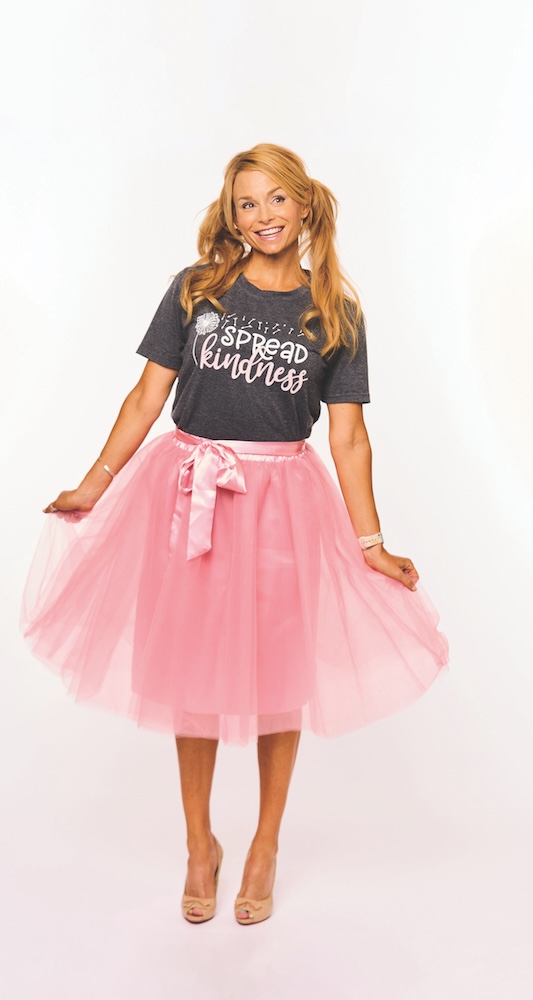
With The Giving List, Van Cuylenburg talks about being an uber-volunteer, best practices on social media, and why in the volunteering world, a good man (or woman) is hard to find (but shouldn’t be).
Zachary Bernstein: Georgia. You’re an actor, but in the realm of volunteering, you hold a staggering number of titles: Founder and Secretary of the Board at Arts Bridging the Gap, Founder and Ambassador for Hearts 4 Community Action, West Regional Leader of the Volunteers for the National Alopecia Areata Foundation, volunteer for the Los Angeles Mission, Children’s Alopecia Project, and the Hollywood Police Activities League… The list really does go on. My question is, when’s the last time you took a nap?
Georgia Van Cuylenburg: You’re so on point. Look, my family’s in Australia and I haven’t had my own family here (yet), so I don’t have many personal obligations. I feel like I was given the right setup in my life to give all my spare time to people that could use the support.
ZB: Tell us about the origins of your volunteering. Where did it begin and how did it grow?
GVC: I joined a friend to volunteer at the Los Angeles Mission for a Thanksgiving event. I don’t want to say it was transformative, but it was a lightbulb moment for me… I wanted to do more. We had fun doing the Thanksgiving meal, but I thought, “What happens to all these people next Wednesday?” So, I started volunteering in the kitchen every Wednesday. I did that for years.
When you work in the kitchen at the Mission, you meet the men in the program who are refreshing their life experience. One guy in the program, Sean, was so angry and didn’t want to do what he’d been asked to do. He looks at me and says, “What are you even doing here? Is it court-ordered, or Jesus-ordered?” And I was like, “It’s me-ordered! Is that okay?”… The experience anchored me to what really mattered. I would deal with all the silliness of Hollywood the rest of the week and none of it felt important because of what I was seeing on Wednesdays.
ZB: I would guess that you encounter a lot of people who say that they don’t have the time to volunteer.
GVC: Every day. I just think it’s so sad.
ZB: What do you feel people are missing out on when they choose not to volunteer?
GVC: I don’t need to be like, “If I can do it, you can, too,” but people should volunteer because it changes your perspective and I promise it makes life so much better.
I almost wish we could find a different term for volunteering because it embraces an idea that when you volunteer, you’re giving to other people. We can reframe what volunteering is to being part of a community, or forming relationships with people. You might be able to give your time and your money, but that person can give you an insight into what so many people experience that will profoundly shift how you feel about your own challenges.
I feel fortunate to have these experiences. No matter how bad a headache is, or how poorly I slept, or whatever drama might be encroaching on my life, I can’t wake up ungrateful.
It disappoints me that so many people will say, “I’m really feeling discontented, or depressed, or I’m feeling frustrated,” then in the same breath they’ll ask, “Why do you spend all your time volunteering?” I think you just answered your own question.
ZB: You don’t take it too personally, do you?
GVC: No, but it’s so funny because lots of people want to know what they will ‘get’ from volunteering and it seems so obvious to me. I’ve been a single woman for a lot of my life, so I often have met people who are trying to be attractive and appealing and I think volunteering is the obvious way. If I met a man who was volunteering, many other data points would disappear off my list of what’s important.
ZB: Have you not met any men during your volunteering pursuits?
GVC: Well… I want to say this with a lot of compassion… I think there’s a big difference between volunteers who are committed to a mission and holiday volunteers. And it makes me sad that people think they’ve ticked the box when they go to a Thanksgiving event and hand out plates of food. I see that you made the effort. I see that you could have stayed home. I get that.
But on those days, we usually have more volunteers than we have people to serve. We have people taking selfies of themselves with the plate and the people… Come next week when no one’s here to serve and you’ll actually do something even more helpful and be even more attractive.
ZB: I think you’re touching upon an important, but somewhat taboo issue in volunteering. Posting selfies on social media while volunteering can be a double-edged sword. On one hand, you want to spread awareness of a cause, but you also don’t want it to come off as just being performative. Can you speak to threading that fine line?
GVC: Look, I went through that journey when I was volunteering with children in India. I was filming the work we did there and taking so many photos. It turns out Save the Children saw the pictures online and took issue with me for a while for reasons I now understand. I thought I was showing people the work that needs to be done, but I learned that can all be misunderstood. These days, I might take one or two pictures at an event to try and share the work that we’re doing, but I think we have to be careful with the fine line between sharing and exploiting.
ZB: You were afflicted with alopecia. It might sound perverse, but someone with your enthusiasm for volunteering being personally affected by that condition has probably been a boon for alopecia awareness. What would you say about other people who might not be so excited to find their community after being diagnosed with any sort of condition?
GVC: The way I approach my alopecia is with a sense of humor and a lightness. I understand that could be very confrontational for people who don’t find it easy to laugh about, but for me I think it’s important to share these tricky, sometimes heavy, topics with a lightness so that people can take in the information and lean in to support.
I just hope that people affected can realize there are many beautiful things about having alopecia areata, whether it’s the fact that you get to see yourself in a stronger light, or you find yourself able to connect with other people that have challenges. It’s impossible for me to be unhappy about my alopecia. Everyone has “stuff.” We just have a signpost on our head that advertises ours. And that’s a very different journey when you can’t hide your thing.
ZB: One of your many titles is “Founder.” It’s one thing to volunteer, but it’s a whole other thing to start your own charitable organization, as you did with Arts Bridging the Gap. What was your experience like founding an organization?
GVC: I grew up surrounded by art; singing, dancing, playing music. That was a core essential part of me. I also experienced trauma at a very early age and never really connected the fact that art was how I survived. That is, until I saw that children in under-resourced communities who didn’t have art were having trouble with basic math and English. I felt I had to do something.
I started researching the role that arts education has on bridging the achievement gap – the “opportunity gap” as we call it now for young people in under-resourced communities – and it was unequivocally clear that’s the thing that’s needed, so I formed an organization from dust. I didn’t know anything. I had to do all the research, go to all the conferences, meet all the people, knock on the doors, and tell people I’m starting an organization. My idea of what the budget should’ve looked like in that first year is hilarious. And how easy it would be because everybody would agree with me! That first year was one of the most depressing years of my life because nobody seemed to agree with me, or they would agree with me, but not be willing to do anything about it.
But over the next few years we turned into an organization that has created over 125 murals, does gardening arts, performing art, music, and digital art. Slowly, but surely, people came on board and we found some really powerful partners. And it just kept going… I’m so proud that 12 years in, it is now what I believed it could be all that time ago.
ZB: What have you learned about being a philanthropic leader?
GVC: The most important thing is listening, and taking time, and thinking and rethinking before you act in a way that will impact a community. I think people with a founder mentality usually do big things fast, which is great and you have to be willing to take big risks. But as well as all of that you have to be willing to do what’s going to be hard, uncomfortable, difficult, will take so much of your time, and exhaust you. If you’re going to do something with integrity in the philanthropic sector, if you’re really going to create something that makes meaningful change, you’ve got to be willing to feel those things.
More importantly, you need to listen to the people for whom you are creating solutions. You have to be willing to be wrong and change. So many things that I thought would work didn’t. I’m just grateful that I was supported in a way to be able to admit I’m wrong and try again and come back. The most important thing is to listen and be willing to change your mind.