Wendy Chang: Good Intentions and Good Outcomes
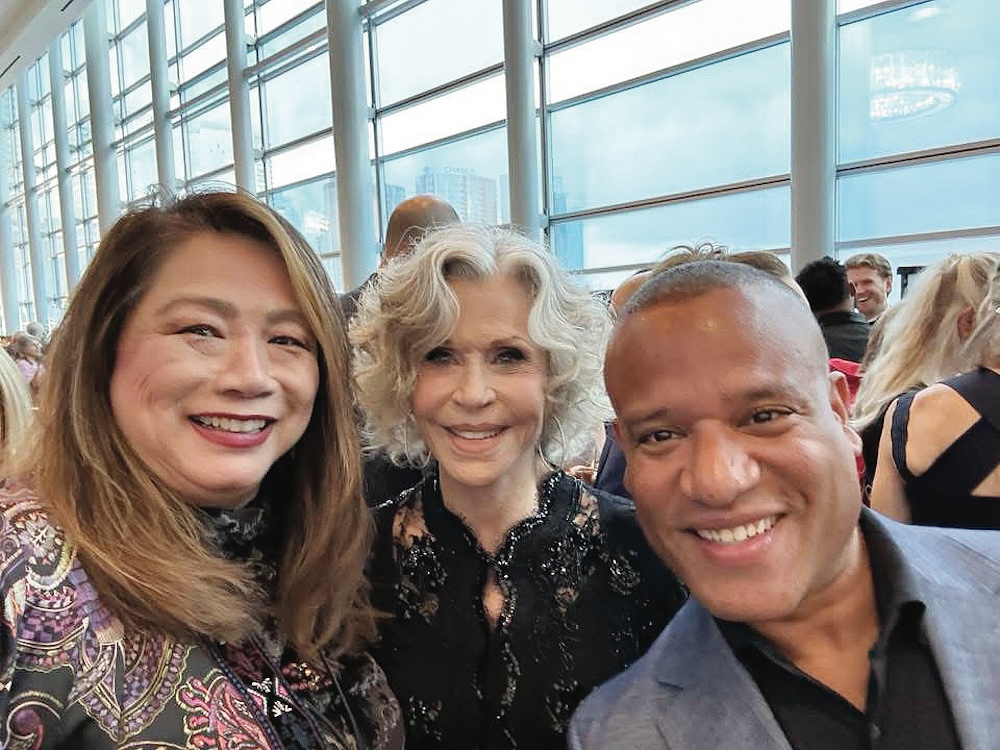
Wendy Chang’s list of philanthropic accomplishments is impressive and long – and it started somewhere unlikely. She was five when her family emigrated from Taiwan and eventually settled in Marin County, a place that offered little in the way of diversity. UC Santa Cruz, where she majored in business econ, wasn’t very different. But two things changed her trajectory there: she met her husband, and she found her way into student council and the Asian Pacific Islander Student Association. That’s where philanthropy and leadership stopped being abstractions and became her language.
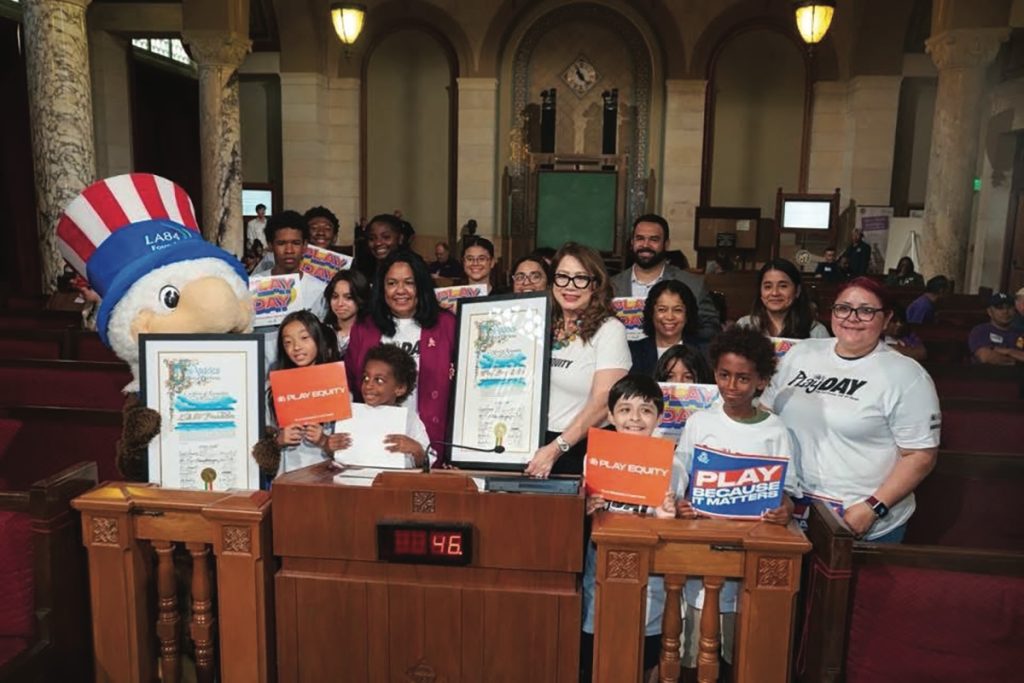
When she and her husband relocated to Los Angeles for his work, Wendy didn’t just find a place in the city’s nonprofit world – she built one, quickly and deliberately. Today she directs the Dwight Stuart Youth Fund, steering support toward educational enrichment and youth development across Los Angeles. Currently, she sits on the boards of Play Equity Fund, Center Theatre Group, LA84 Foundation, and Lambda Legal, and lends her expertise to fundraising and advisory work well beyond that list including Champions Chair of Liberty Hill Foundation and Advisory Board Chair of East West Players. But numbers and titles only tell part of the story. As she makes clear in our conversation, everything she does traces back to one conviction: access, equity, and inclusion belong to the people who need them most – and it’s her job to make sure they get there.
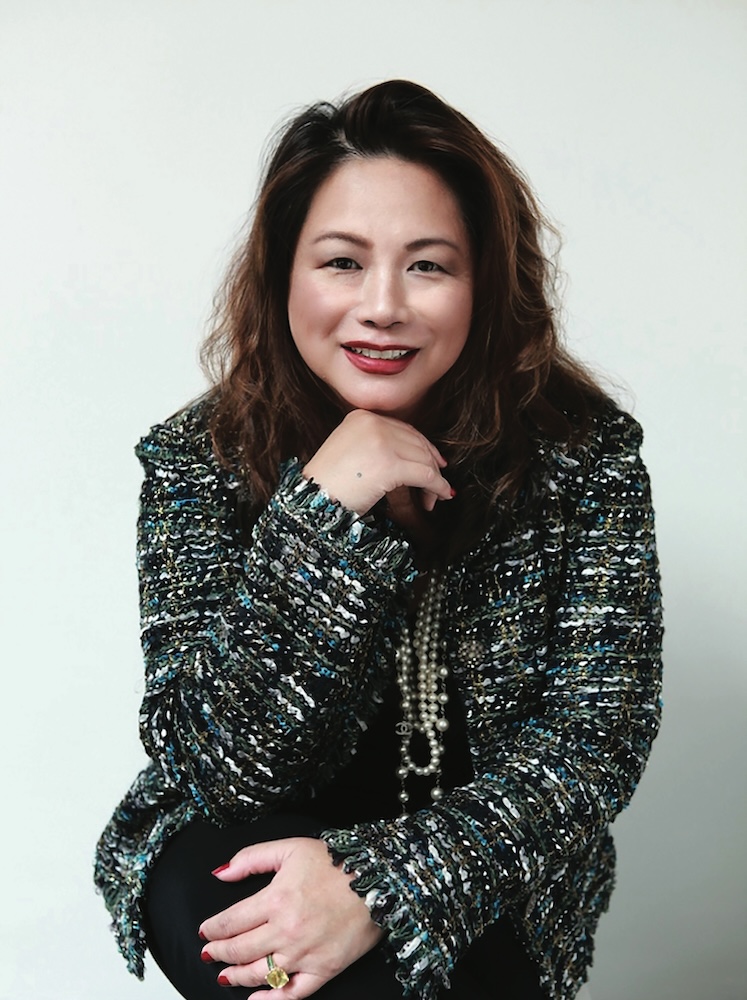
Jonas Oppenheim: How would you describe your personal mission as a philanthropist?
Wendy Chang: I didn’t set out to be a philanthropic leader. I set out to be useful. My earliest exposure to this work came through volunteer leadership, not a grantmaking seat. I was showing up for organizations before I fully understood the systems I was operating inside. At some point, showing up stopped being enough. I started asking harder questions: Who’s in the room when these decisions get made? Whose voice shapes what gets funded and what doesn’t? That shift – from participation to responsibility – is really the story of my career. I didn’t arrive at social justice philanthropy with a manifesto. I arrived at it by paying attention.
My portfolio looks like three separate commitments – social justice, the arts, youth development – but it’s really one belief, expressed in three places. Equity and inclusion make for a better world. None of it happens by accident; access has to be built, and then defended. I often say that an attack on one of us is an attack on all of us. That’s not a slogan – it’s an operating principle.
JO: What’s an example of a time when you’ve put “an attack on one of us is an attack on all of us” into action?
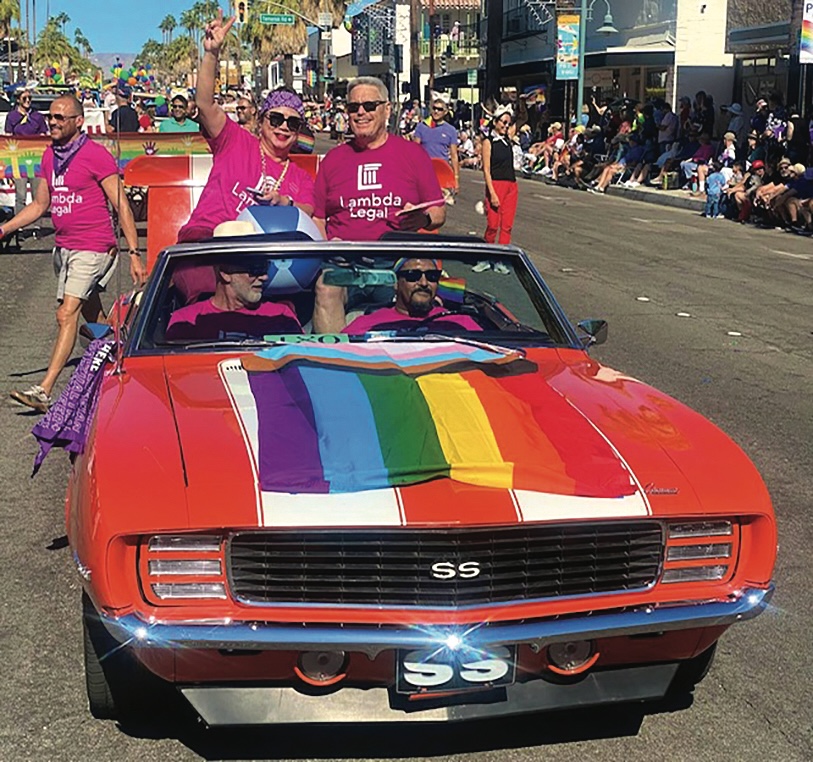
WC: I don’t identify as LGBTQ myself, but I’ve been deeply active in this fight for years as an ally, and I sit on the board of Lambda Legal and am co-founder and co-chair of the OUT Fund because I believe the connection between that community and every other community fighting for its rights is not abstract – it’s mechanical. Rights don’t erode in isolation. When one community loses ground, it doesn’t stop there; it’s a slippery slope, and the next community with the least power is next in line. History bears this out again and again. So for me, showing up for LGBTQ rights isn’t a separate cause from the other work I do in racial justice or youth equity – it’s the same fight. The only thing that stops that slide is people who aren’t directly affected, deciding to stand up anyway.
JO: What aspect of your work in philanthropy has been the most challenging?
WC: Across the boards I serve on, fundraising can be genuinely challenging, and part of that is about visibility. So much giving – and this is completely understandable – flows toward the institutions people already have a direct relationship with: their alma mater, the hospital that cared for them or their family. Those are worthy causes, and I’d never want to talk anyone out of supporting them. But there’s a whole universe of other organizations – smaller, less visible, doing essential work in equity, youth development, the arts, civil rights – that could do so much more with a fraction of that same generosity. That’s what drew me to serving on the Board of Directors for Liberty Hill Foundation. Through its Community Funding Board, Liberty Hill Foundation helps to identify these types of grassroots organizations, fund them, and raise their visibility to amplify their missions. My hope isn’t that people give less to the places they love. It’s that they widen the aperture a little – that they consider adding one more commitment to something less familiar, because I think that’s where philanthropy does some of its most important work.
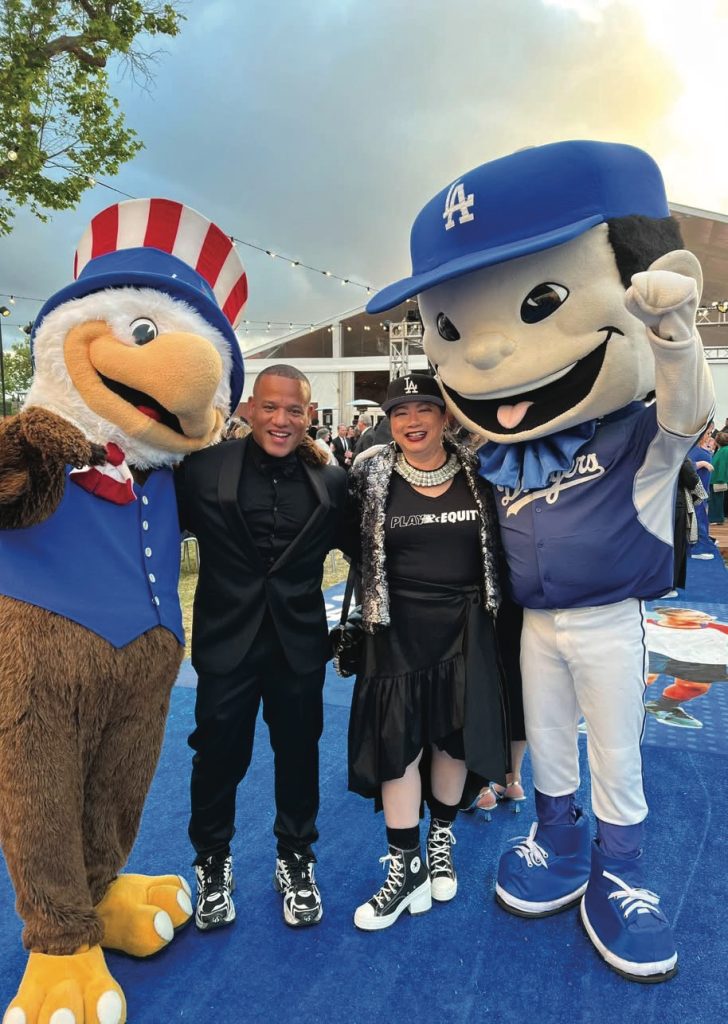
JO: During those early experiences with organizations at Santa Cruz and in Long Beach, what were you learning? How to ask people for money, fundraising, those kinds of skills?
WC: So many organizations in Long Beach welcomed me in, and that let me build a broader understanding of why showing up matters. Working alongside leaders at those organizations gave me the confidence to start asking questions – real ones, not just polite ones. That skill takes practice. What I carry from UC Santa Cruz, and honestly from every organization I’ve touched since, is a discomfort with easy answers. Good intentions aren’t the same as good outcomes. That discomfort has kept me honest for 35 years.
Fundraising is a huge part of this work, because you can’t rely on a couple of staff members to bring in all the resources an organization needs. It’s about sustaining the mission and keeping the lights on. Board members also carry a wider network than staff typically do, which is exactly why development work deserves as much seriousness as governance. You can’t run an organization without money and other resources.
At Dwight Stuart Youth Fund, the thing I’m proudest of isn’t a single program – it’s our deepening commitment to capacity building. Funding a program matters. Funding an organization’s ability to sustain that program, to weather a leadership transition, to survive a hard year – that’s the work that actually changes trajectories. I’ve come to believe that under-investing in an organization’s infrastructure is one of the quiet ways philanthropy fails the communities it claims to serve.
I also care enormously about giving circles. Founding and co-chairing the OUT Fund and Circle of Change, both housed at Liberty Hill Foundation, taught me that philanthropy doesn’t need to live in a single donor’s hands to be powerful. Pooling resources with people who share your values, and making decisions together, is its own form of the equity we’re trying to fund – nobody’s voice outweighs anybody else’s at the table. Don’t underestimate the quiet gift. Headline gifts get applause, but it’s sustained, unglamorous commitment – the giving circle contribution made every year for a decade, the board seat held through the hard stretches – that builds something that lasts.
JO: You obviously have a lot of insight into this world. How do you work mentorship into your philanthropy?
WC: I’ve built genuinely close relationships with the leaders of the nonprofits we fund through Dwight Stuart Youth Fund, and with executive directors on the boards where I serve. That closeness isn’t incidental to the work – it is the work. Change happens at the speed of trust. You cannot solve a problem you’re not willing to be honest about, and most funder-grantee relationships aren’t built for that kind of honesty. So, I try to build ones that are.
What I tell every leader I work with is: if you don’t tell me what’s wrong, I can’t help you. That’s a hard ask, because most nonprofit leaders have learned (often the hard way) that admitting a struggle to a funder can cost them the funding. So, the instinct is to perform wellness instead of naming difficulty. I understand that instinct, but it keeps everyone stuck. Real support only happens when people are willing to be open about what isn’t working, and funders must earn the kind of trust that makes that honesty feel safe.
That belief shaped something we built over a decade and a half ago: a communications-training program for a new cohort of grantees each year. The way in isn’t a polished case for support – it’s telling us what’s going not right in the organization. It runs against every instinct nonprofit leaders are trained to have, but it’s also how real relationships, and real change, actually get built.
JO: Where does happiness fit into your work?
WC: Honestly, part of why I’ve stayed in this work for so long is the people. The friendships. There’s a particular kind of bond that forms when you’re standing shoulder to shoulder with someone who shares your beliefs and values, working toward something neither of you could accomplish alone and some of those friendships have become the most durable, most joyful relationships of my life.
I have two kids, and whenever they feel stuck – in their career, in their sense of purpose, in just about anything – I tell them the same thing: go volunteer somewhere. It sounds almost too simple, but it works, every time. Stepping outside yourself and toward other people has a way of loosening whatever’s gotten tangled up inside you. You stop circling your own problems and start meeting people who care about the same things you do, and something about that shared alignment resets your sense of what’s possible.
And the byproduct is enormous: you build a social network that isn’t transactional, that isn’t built on convenience – it’s built on shared conviction. That’s the kind of network that shows up for you. Not just in the good seasons, but in the genuinely hard ones. It carries you. I don’t think I could have sustained 35 years in this field without it. The work has given me purpose, but the people it’s put in my life – that’s given me joy.
JO: So much of your focus is on serving children, especially from under-resourced populations. Why is it important to provide these opportunities for children from across backgrounds?
WC: Children and youth development work is where I put all my faith in the future. It starts with belonging – with young people understanding they’re part of something bigger than themselves. That sense of belonging, or the lack of it, either compounds or collapses in those early years, and it shapes everything that follows. That’s why every organization I support, whether through a board seat or through the Fund, is either youth-centered or has a youth component built into it.
JO: What does working in philanthropy in Los Angeles mean to you?
WC: Coming from the Bay Area, I carried a lot of stereotypes about Los Angeles – mostly unfounded, as it turns out. Today, I’m the city’s biggest booster. Had I stayed in the Bay Area, my world would have stayed so much smaller than it is now. Los Angeles is enormous, and it’s genuinely diverse in a way few places are. And all of it is available to you, if you want it. You can show up with your time, your talent, your treasure – in almost any corner of this city – and find a place to plant yourself. That’s a pretty remarkable thing to have access to.