Scott Sale: The Three W’s of Philanthropy
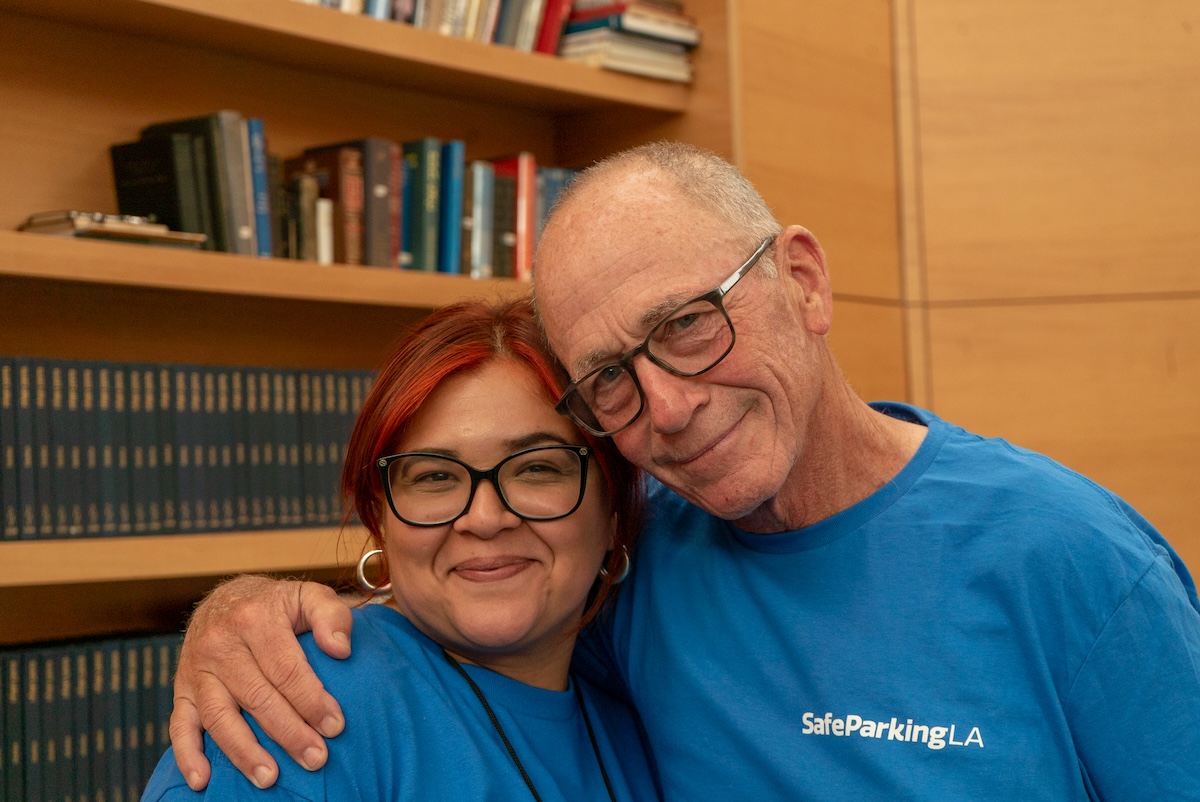
Most physicians take an oath to do no harm, which seems like a reasonable bar to clear, but a special few go above and beyond to do a whole lot of good. Scott Sale practiced medicine in St. Louis until his wife’s career led to a move west in 1999. He had worked with charitable organizations back home, and in California, he got involved with nonprofits like New Directions, Imagine LA, and Village for Vets. He was also active with Leo Baeck Temple, where he became focused on the plight of unhoused people living in their cars. Sale and his partners applied themselves to launching Safe Parking LA, a safe-parking program in Los Angeles, similar to one that was thriving in Santa Barbara.
It was a thorny, multiyear project that began with identifying parking lots with sympathetic owners, usually churches and synagogues. Then Sale and company had to address legal, health, and safety requirements, everything from providing bathrooms and hiring security guards to garnering insurance and working with the Los Angeles City Council. Nine years later, Safe Parking LA has grown into the largest such program in Los Angeles, operating from the San Fernando Valley to Downtown L.A. to the Veterans Administration in West L.A.
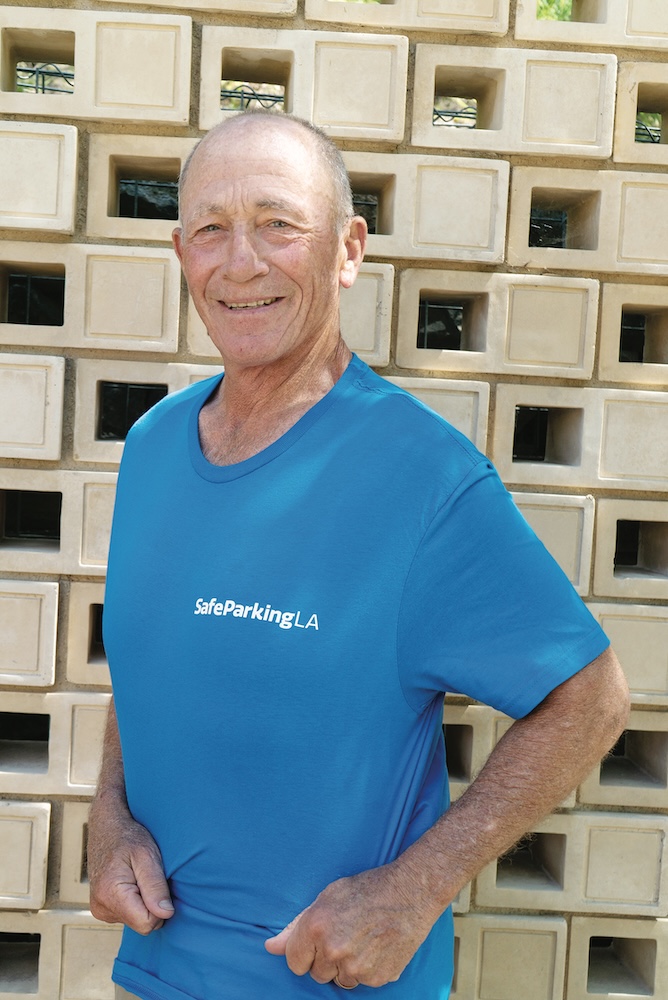
Jonas Oppenheim: What set you on the path of devoting your time and energy to service?
Scott Sale: I think it all came about because I experienced having been bullied as a young kid. Later, going to med school just instilled all this confidence that I wouldn’t be bullied anywhere because I knew my stuff. That experience made me care more about the other guy. Plus, I practiced medicine. I was a primary care doctor. The makeup of a primary care doctor is somebody who cares about other people. I loved doing that. I did primary care for 25 years. And as a practicing physician, I sat on some community service boards. I was a Jewish Federation board member in St. Louis. I was on the board of Jewish Family Services. Most physicians were kind of volunteering their time anyway. In those days, physicians would be on the phone for hours, no pay. I take your call. It was just what we did. Now you can’t hardly get a hold of anybody without them being a concierge guy or getting bad service. Anyway, my brain was always very empathetic.
And then my life changed, when we moved out here to California when I was 48. When we moved, I didn’t consciously think about reinventing myself. But along the way, a friend of mine that I golfed with said, why don’t you join our board? We work with homeless veterans. So the homeless veterans space got me going, and I learned a ton about the whole arena of homelessness here in L.A. I’ve been involved in this arena ever since, trying not to be a Band-Aid guy but a system-changer.
JO: You co-founded and are the former executive director of Safe Parking LA. What hats are you wearing right now?
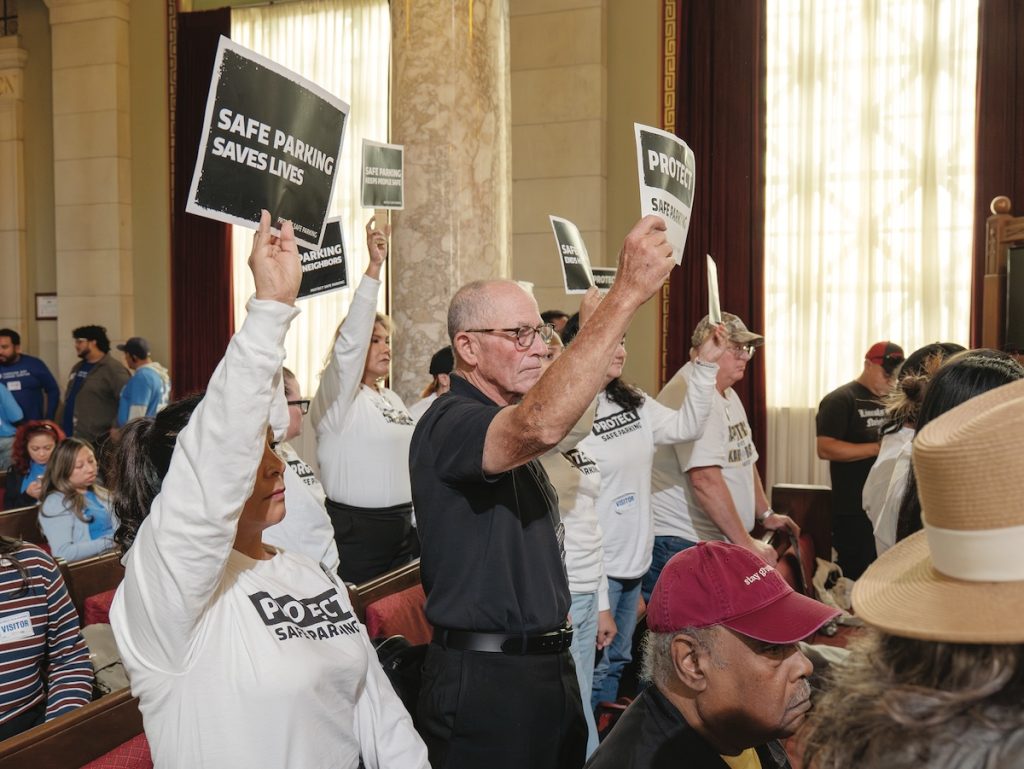
SS: I identify as a volunteer and board member slash co-founder of Safe Parking LA. I’m still very active almost on a daily basis. I fundraise. I network. I advocate locally with influencers, political, nonpolitical, and when appropriate with funders. I volunteer with the Warmline, answering the phones and engaging with prospective participants, five days a week, sometimes six. We get on average between emails, phone calls, et cetera, at least 50 to 80 inquiries every day. It just blows me away that there is so much need. From Angelenos who have been here their whole lives, and those who come out to L.A. trying to make it. Everyone needs refuge.
The other part is the philanthropy. I learned early in this journey that there are three kinds of involved people. The three W’s: workers, people with wisdom, and people with wealth. My wife and I are able to give money to the organization because my wife does great. She said, you know, Scott, I’m giving us a great life on Earth. You’re going to give us a great life after Earth.
JO: You’ve been involved with another organization looking to tackle homelessness, LifeArk, which designs modular, pre-fabricated housing units. What can you tell us about that?
SS: I got involved with the LifeArk through LA Homeless Services Authority. I thought it was the coolest modular housing concept that I’ve ever seen. It fit into what I was doing at Safe Parking LA because it has to do with finding places for people living in their cars where they could live cheaper. I thought LifeArk was really a great answer, so I became a huge cheerleader. And I’m not bragging but I actually was very instrumental in getting the only LifeArk project in the city of L.A. I brought some city politicians out to LifeArk and said, you’ve got to see this thing. This is a great answer; where you’ve got empty parking lots, or empty undeveloped lots, put these modules there. The bureaucracy and getting all the approvals, et cetera, was a whole different thing.
JO: Why is it important to get creative in addressing homelessness?
SS: Because the rate-limiting issue, that’s my medical term that I always use, the rate-limiting issue in dealing with people who are experiencing homelessness is the lack of housing that they can afford. I mean, it’s all over the country. It’s not just here.
JO: What needs to happen for us as a society to eradicate homelessness?
SS: I would say one of the key things that the public needs to understand is that solutions are multifactorial. There is not one answer. Every single segment of the population experiencing homelessness needs a different answer. The other thing is that the public needs to not be afraid of the answers. It’s been proven, and there’s plenty of examples of where housing has been put in place, and those with reservations realize that it’s a boon, not a bane.
JO: You also served on the Mid-City West Neighborhood Council. How did that serve your philanthropic goals? Or were you coming at it from a different angle?
SS: That’s in and around Canter’s Deli. Canter’s being the center of the Mid-City West Neighborhood Council. I enjoyed it. Met a lot of nice people. It got me more involved in the understanding of the city. We had a separate group of us that were a coalition of homelessness advocates, running as a slate. I thought that I could better serve that population that I was entrenched with and trying to help.
JO: Were you successful?
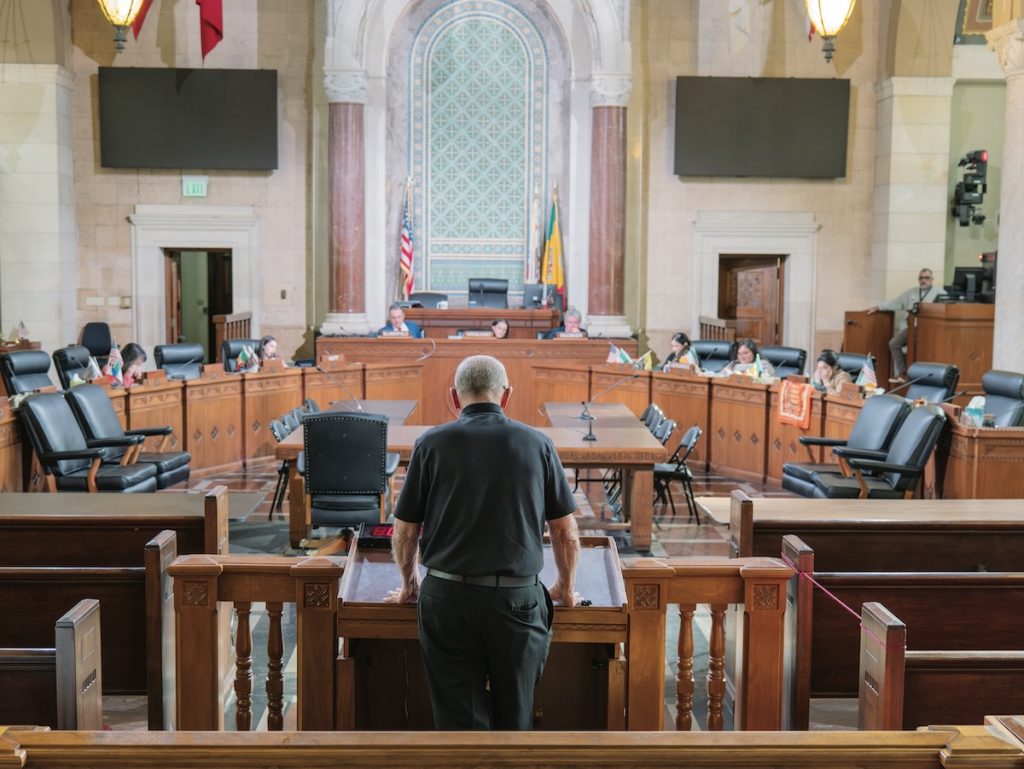
SS: Yeah, I think I was. Because I was one more positive vote in terms of finding resources for people in our neighborhood experiencing homelessness. I think it certainly gave me more cachet when we would have conversations about a potential safe parking lot. The cachet was, I’m a neighborhood councilman. I’d be able to go to another neighborhood council and say, hey, we don’t have any lots in our district where we can provide safe parking, but you do, and I understand all the constraints and all the neighborhood questions you have. Here’s our data. So I think that had some value.
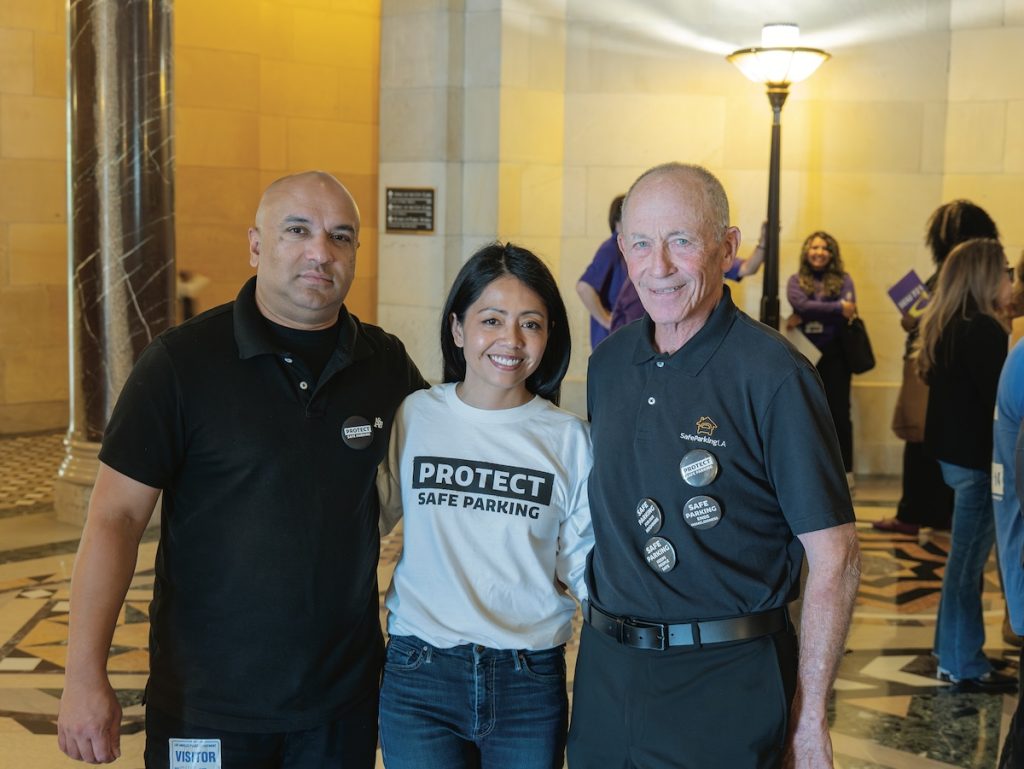
JO: What about the homelessness crisis isn’t getting across to some people?
SS: I wish more folks understood that there are 20,000 people living in cars in L.A. who are trying to survive, trying to work, and not causing trouble. They’re known as the “hidden homeless.” There are also the “visible homeless,” in the RVs and the encampments. I want people to know that we run Safe Parking LA, in a very cost-effective way, to prevent the hidden people from complete unsheltered homelessness. People in cars are often employed or have a source of income. We’re actually preventing them from falling further into homelessness. I think we have to figure out a way to get that message out there. I talk to people on a regular basis, friends of mine – obviously my better friends know all about Safe Parking LA because they’ve all donated. Otherwise they’re not my friend anymore. Just kidding. – But if people don’t know, I would hope they’d at least be curious.
That’s the other thing, curiosity. I wish we could get that message through, that there are people who aren’t you, and what they’re going through.
You don’t necessarily have to help them. You just need to be aware. And don’t believe that those experiencing homelessness have a negative impact on society. The amount of money that it costs us to serve them is relatively small. Also they are looking to get back on their feet and into housing. If you took twenty people living on our lots for two months or six months, interviewed them, and asked what are your aspirations? What’s your big goal? That goal is to have a job and get an apartment like most people.