Kimberly Winick: The Symphony at the Heart of a Community
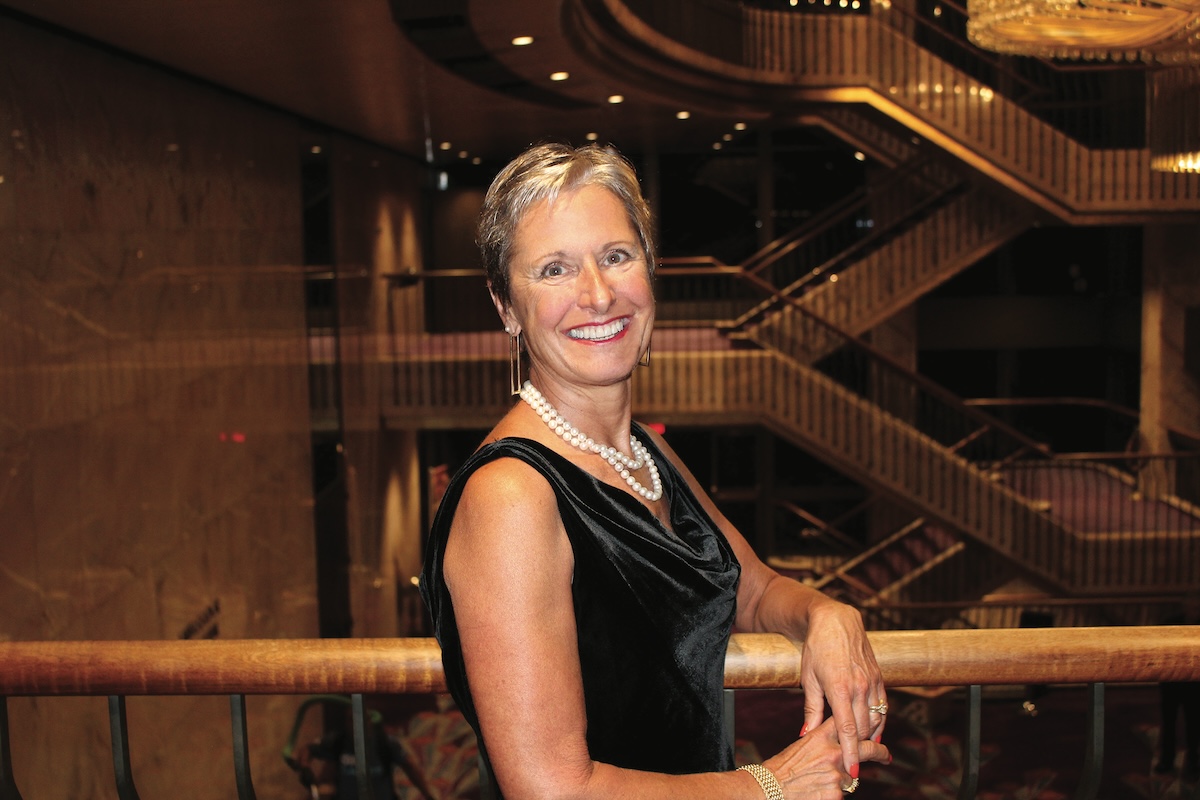
When Kimberly Winick was attending law school in Texas, she worked as a research assistant for a then-little-known professor and future senator, Elizabeth Warren. At that point in her life, Winick was still uncertain where her law career would take her.
But over her stellar, wide-ranging 40-year career she not only found professional success but personal and philanthropic success as well. Winick is a commercial finance lawyer and a mediator for local bankruptcy courts who often provides pro bono services in Spanish. Having served on many professional and civic organizations, Winick acted as a lawyer representative and an executive committee member of the Ninth Circuit Judicial Conference and as chair of the education committee of the State Bar of California. She is also a past president of both the Financial Lawyers Conference and the Los Angeles Bankruptcy Forum. She is currently a commissioner of the West Hollywood Public Safety Commission, and previously has served on the City’s Transportation and Mobility Commission and as secretary of the West Hollywood West Residents Association.
Her devotion to civic organizations and her passion for the arts led her to become the board president of the Pasadena Symphony Association, for which she is a fierce advocate, earning an MVP award from the Association of California Symphony Orchestras in 2025.
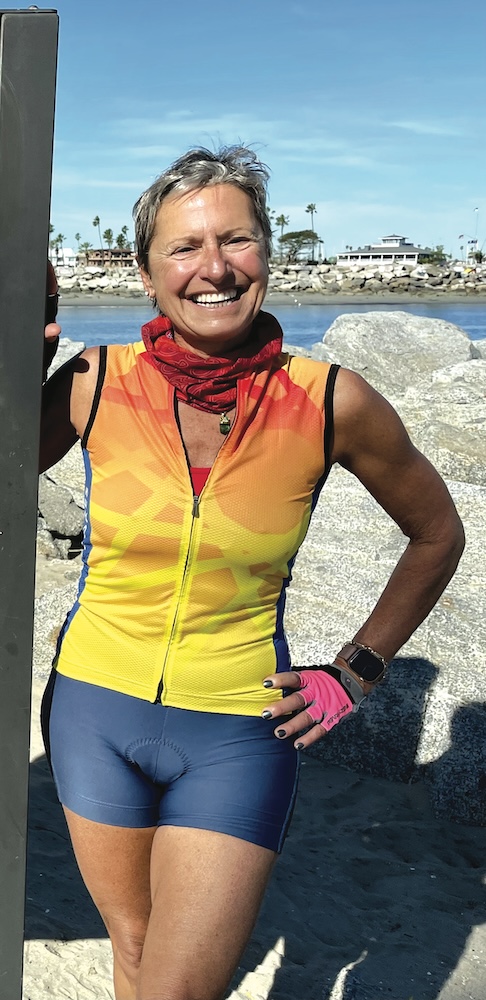
She is an avid swimmer, a cyclist, the literal baker of the family bread, and still somehow finds time to travel.
Here, Winick talks about the joy of smaller civic institutions, making time to ride her bike, and how being a lawyer is actually a great precursor to becoming a champion of the arts.
Zachary Bernstein: You’re the Pasadena Symphony’s board president now, but you first came to them as a bankruptcy lawyer after the 2008 financial crisis when they were in dire financial trouble – as many places were. It’s like finding an injured bird on the street, nursing it to health, and then taking it on as a pet.
Kimberly Winick: Yeah. You have to keep feeding it. Look, they were paying me as their lawyer, right? They realized I would keep giving them advice for free if I weren’t being paid, so they asked me to join the board. I enjoyed the music and the people, so it just felt really nice to be able to help.
I joined as the head of the finance committee, even though I’m not an accountant. Then a few years ago, I felt like, on a personal level, maybe I wasn’t really making that much of a contribution. I thought about stepping back onto the advisory board. But the then-CEO said they wanted me on the investment committee, which manages the endowment. I agreed to do that, little realizing that their next intention was for me to become the head of the investment committee.
At the end of 2022, I decided that I was going to take a sabbatical. No new law clients. I was going to do a couple major bike rides. I was going to take my husband to Africa for a month. I wasn’t going to do anything. But there were some structural changes at the symphony in early 2023 and while I was in Zanzibar, I got a phone call asking me if I would be willing to step up and serve as president of the board.
ZB: Did you ever think that your career in law would one day lead to becoming a board president of a symphony orchestra? How common is this phenomenon?
KW: I do think lawyers have a certain amount of leadership skills, but what I have been saying to people since the day I started in this position is that I’m learning a lot. It’s fascinating. There’s so much I didn’t know about how this organization runs and I’ve really delved into it. I feel like this is the culmination of my 40-year career. Everything that I’ve learned as a lawyer; the soft skills about working with people, the years on the board watching others from different career backgrounds, the required attention to different details. It’s been a fabulous learning experience.
ZB: Everyone likes music, but from your vantage point, what can you tell us about why music is important for the community? What are the tangible net positive results from simply holding these concerts?
KW: First of all, the Pasadena Symphony will be a hundred years old in the 2029 season. The music gives people something to look forward to. There’s a sense of community pride. I should point out I don’t live in Pasadena. I actually live in West Hollywood, but my fellow board members mostly live in Altadena, La Cañada, and the San Gabriel Valley. It’s a point of civic pride for Pasadena citizens to have their own symphony.
We have three key elements: the symphony, the pops, and our youth symphony orchestras. We serve about 700 kids in the San Gabriel Valley. There are studies about the benefits of having an opportunity to make music. Having an opportunity to hear other people making music also is joyful and healthy for your brain. There’s something wonderful about your mind focusing on nonverbal communication and that’s what music is. There’s a science to it and it feels good.
ZB: You mentioned you once worked for Elizabeth Warren before she was a politician. What’s the state of arts funding today in our political moment?
KW: Right now? If you want to get federal funding, you have to go along with the current federal program, which includes not doing DEI and doing things along the taste of the guy who happens to be in control right now. I mean, I think you can see what’s happening with Kennedy Center. There’s a number of artists who have simply decided they’re not willing to go along with those constraints.
More to the point, we considered seeking a grant for this year’s program on the 250th anniversary of the United States, and decided not to. There would be federal funding available to support that kind of programming. It would be lovely to get that.
But in order to get that funding, you have to renounce diversity, equity, and inclusion. And you have to pretend that half of our nation’s history didn’t happen and other things that we’re not going to do. The County of Los Angeles actually provides funding and we get that. [County Supervisor] Kathryn Barger has been a major supporter of our organization. The County requires attention to diversity, to equity, to inclusion, to involving people, to respecting people regardless of where they’re from, or what their sexual orientation is, and so forth.
As a symphony, we have been working for a number of years on diversifying our product and not just because it seems like the right thing politically to do, but because if you want to broaden your audience, if you want to reach younger people, if you want to reach people of color, if you want to reach people from different parts of the community, they want to see people on the stage who look like them. We’ve been making a real effort in the last decade to bring in musicians with different backgrounds and different experiences; ages, colors, and training. It makes everything much richer and more interesting. Everybody brings an additional perspective and that unfortunately is not really supported by the federal government right now.
How’s that for a nearly politically neutral statement?
ZB: Nailed it.It’s not lost on me that the Ambassador Auditorium was built partially with church services in mind. You could say that the symphony is kind of a secular congregation of sorts. How much of your social life has been enhanced by the work you do at the symphony?
KW: I do have a life apart from the symphony. I’m a cyclist, so I ride bikes with a couple of groups of people that have nothing to do with the symphony. In summers though, we have the Pops concerts and I share the hosting of people in the conductor’s circle. Every other week, I organize a potluck dinner for 20 people. It always winds up being a lot of fun.
The thing is that, even though I’m president of the board, I’m not exactly part of Pasadena society. There are actually advantages to my not being deep in that circle because I can really have a more judicious approach to decision making in management and worry a little bit less about the sociopolitical aspects of whether someone was invited to join the board, or someone was asked to leave the board, or worry quite the same way about the social implications.
ZB: You said you live in West Hollywood, but you’ve given so much of your time to an institution based in Pasadena. Anyone familiar with Los Angeles geography and traffic patterns understands how deeply this illustrates your commitment. What motivates you to keep making that commute?
KW: The Hollywood Bowl, the Walt Disney Concert Hall… Everything’s between me and Pasadena, which is a 15-mile bike ride. I allow an hour when I have a meeting in Pasadena.
ZB: Oh, you bike there? That’s pretty hardcore.
KW: Not during the week. It’s just for recreation rides and morning meetings on weekends.
ZB: I think you’re a hardcore cyclist and you don’t realize it.
KW: Cycling is a central part of my life – it is a core of my social life and I plan travel around cycling as well. Like music, it is good for my soul. And the commutes to Pasadena are not a big deal. I continue to serve the Pasadena Symphony because it’s very gratifying. I feel like I’ve been able to make a real contribution and that my efforts seem to be appreciated. I think this is a worthwhile organization and you only get so many chances in your life to really make a meaningful contribution.
ZB: What would you say to anyone – lawyer or not – who wants to get involved with one of those arts organizations and doesn’t know where to start?
KW: Show up. You don’t need to know everything about it. You just need to care about finding out how you might be able to help. Then get to know the right people. It’s not that hard. Do you have a sense of how much of a commitment you want to make? When I started out, I had no idea that this is where I would wind up, with this degree of commitment, particularly during my first year as president, which was more than a full-time job as a volunteer. But you don’t know. And you just need to start out with what appeals to you, what makes you feel good, what makes your heart sing, and do it.